

Every day, we encounter chemicals in the air, water, and earth, as well as in consumer products like food and cosmetics. While many chemicals are harmless, some—particularly those used in industrial processes—can pollute our environment. The Environmental Protection Agency (EPA) reports that serious chemical accidents or oil spills occur about once every two days in the United States. Even after the clean-up is done, exposure to hazardous chemicals can have long-term impacts on the environment and public health.
When hazardous chemicals are released into the environment, they don’t just damage human health—they impact entire ecosystems. Plants, aquatic life, and even pets can develop health problems from chemical exposures. Studying the effects of these exposures in humans is challenging because our environments and lifestyles are highly variable.
Pets, on the other hand, are easier research subjects: most pets live in the same home, eat the same foods, and follow the same daily routine for most of their lives. This consistency reduces the number of variables that could complicate research efforts. By studying how chemical exposures from environmental disasters affect pets, scientists can better understand how these exposures may show up in human populations and contribute to the development of chronic health conditions like cancer.
Studying dogs to understand health effects of chemical exposure
Darwin’s Ark scientists are studying dogs impacted by one of the most highly publicized chemical accidents in recent years: the East Palestine, Ohio train derailment. In February 2023, a freight train derailed in the village of East Palestine, Ohio, releasing 100,000 gallons of vinyl chloride and other hazardous materials. Residents and pet owners near the derailment site were understandably worried about the chemical spill’s health effects.
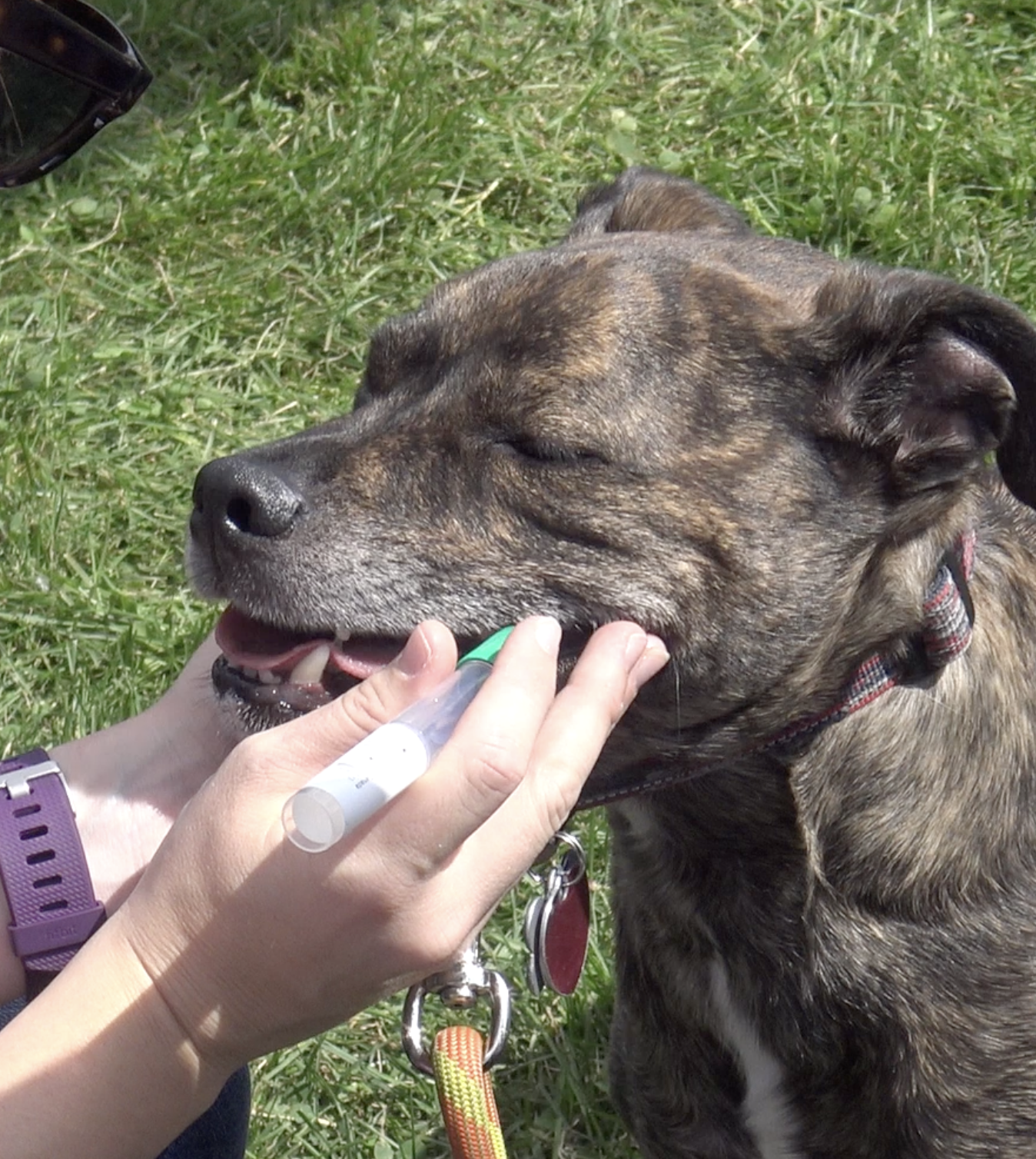
As part of Darwin’s Ark’s Cancer Project, our scientists are conducting a study to investigate connections between chemical exposures from the 2023 Ohio train derailment and the development of cancer in dogs. Using an environmental monitoring method called passive sampling, participating dogs wear a silicone tag on their collar for one week. The silicone tag absorbs organic chemicals present in the environment, which our scientists then extract, identify, and quantify. Owners also complete short surveys about their dog’s environment. By collecting this data from hundreds of dogs, researchers can map chemical exposures across different regions and analyze how these exposures—and what levels of exposure—might relate to chronic health conditions like cancer.
Currently, Darwin’s Ark scientists and their collaborators at Oregon State University are analyzing the data collected from dogs in this study and hope to publish their findings in late 2025. Findings from this study could help researchers better understand how chemical exposures contribute to canine cancer development, while also providing broader insights into how environmental chemicals impact the health of pets and the humans who care for them.