


How many dogs does it take to power genetic discovery?
Ask a scientist, and you’d probably hear some version of “a lot.”
Darwin's Ark Director of Research Kasia Bryc, PhD, might take it a step further.
“I want all of them!” she said.
She may not get all of them just yet, but many more dogs can now take part in our genetic research. After a nearly two-year pause, DNA sequencing is returning to Darwin's Dogs this month.
More than 4,000 dogs previously had their genomes sequenced with the initiative, and now more canines can join them. Whether they're young or old, purebred or mixed breed, there’s much to learn about the dogs we know and love. Their DNA, paired with what our community scientists share through surveys, becomes part of a growing resource for canine research.
Darwin’s Ark paused dog sequencing in late 2024 as the organization expanded its community science approach to cats and began updating the systems and processes needed to support both initiatives. Much of that work happened behind the scenes, helping prepare Darwin's Dogs for its next phase.
More dogs, more possibilities
One goal of Darwin’s Dogs is to build a genetic resource large and diverse enough to help researchers explore questions that might otherwise be difficult to study.
“There are so many things that open up with bigger data,” Bryc said. “Your ability to detect more interesting things goes up as your dataset increases. Your ability to study rarer things also increases.”
Take a trait or health condition found in just one out of every 1,000 dogs. In a group of 1,000 dogs, researchers might have only one example to study. But with thousands more dogs, they have a much better chance of finding enough examples to look for meaningful patterns.
Larger datasets can also make genetic associations, or patterns that suggest a connection between DNA and a particular trait or condition, easier to distinguish from coincidence.
“There are so many things that open up with bigger data,” said Director of Research Dr. Kasia Bryc.
A little drool can go a long way
Building this kind of large-scale resource may be a big undertaking for researchers. For individual community scientists, though, contributing DNA remains pretty simple.
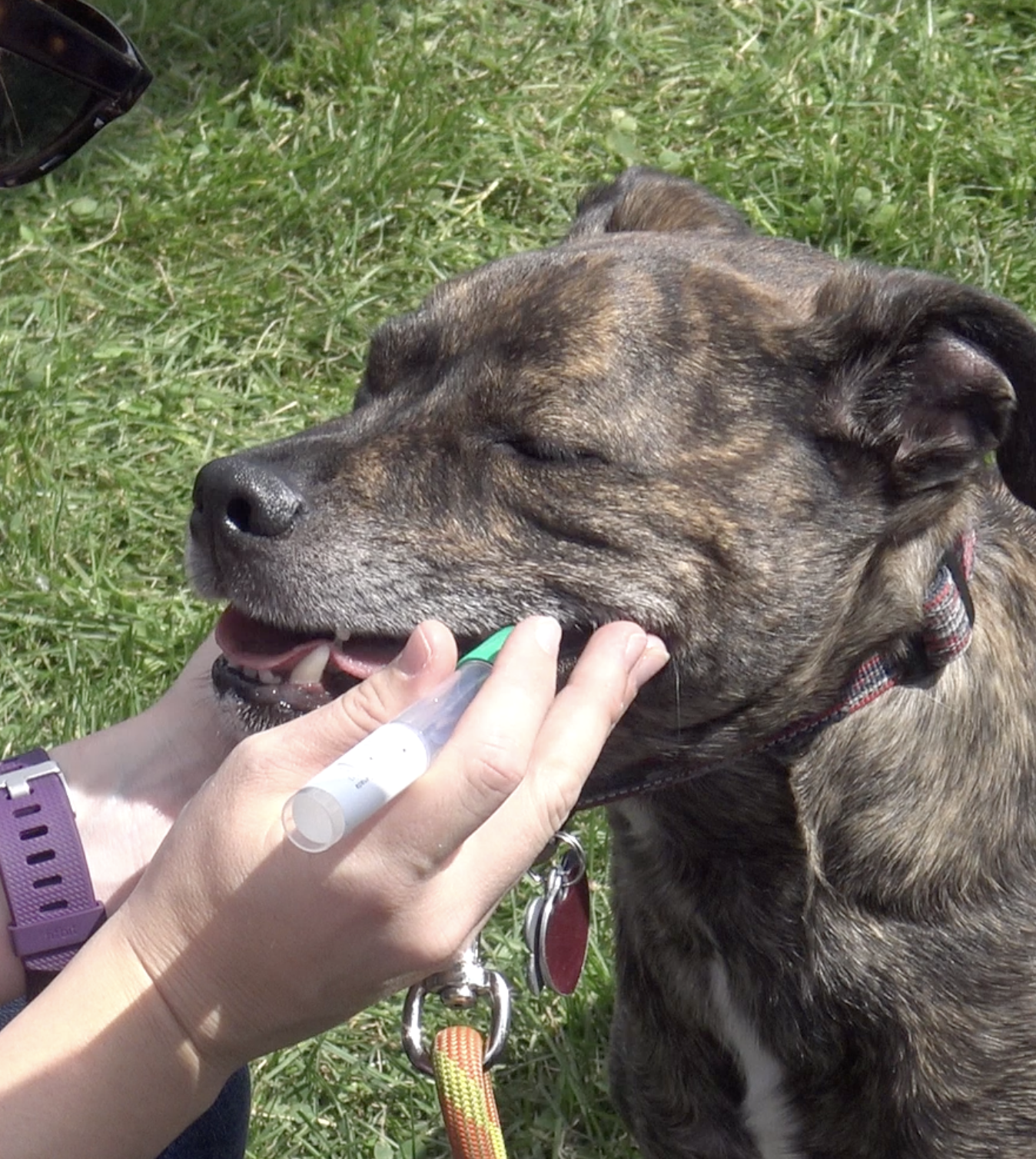
For returning participants, the collection process hasn't changed. Grab the swab, find a cooperative canine and gently tuck the spongy end of the swab inside your dog's mouth. Rub it along the inside of the cheek for about five to 15 seconds.
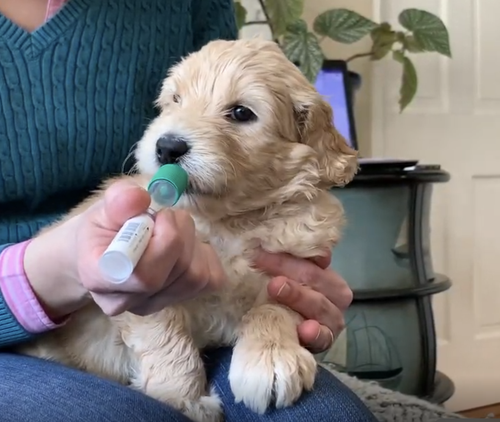
No need to pry open your dog's jaws or go searching for their tonsils. This isn't a canine strep test. All you need is a little slobber.
A resource for questions still to come
As the Darwin’s Dogs genetic database grows, Bryc sees an even bigger opportunity for discovery. Rather than use the data only for Darwin's Ark's own research, she hopes it can support many studies and collaborations with other scientists.
“From my perspective, it's about how we can leverage the data so that each dog isn't contributing to just one study on one disease, but to lots of studies,” Bryc said. “That's the dream.”
It's an approach that has become common in human genetics. Large biobanks bring together de-identified genetic, health and other biomedical data from many people, allowing scientists to study a wide range of questions. Instead of starting from scratch and recruiting a new group for every study, they can work with information that has already been collected.
Bryc pointed to the National Institutes of Health's All of Us Research Program as one example. The program brings together genetic, health and other information from participants to create a large research resource that scientists can use to explore many different questions. Bryc sees potential for Darwin's Ark to follow a similar idea, growing its database over time and collaborating with scientists who bring different perspectives and specialties.
That approach could allow one dog's DNA and survey data to contribute to multiple studies, perhaps including research questions no one had in mind when that dog first joined Darwin's Ark.
DNA tells only part of the story
But DNA alone can't tell researchers everything they need to know about a dog. Survey answers add important context about their behaviors, experiences and other traits that can't be measured through sequencing.
Does your dog eagerly greet new people or prefer to keep their distance? Are they highly motivated by food or a picky eater? Do they howl?

Turns out, that last question has an interesting genetic connection. In a 2022 Darwin’s Ark study, researchers paired owners’ answers about their dogs’ behavior with genetic data and found a genetic association with howling. DNA alone couldn’t tell researchers which dogs howl. They needed their owners to tell them. Across thousands of dogs, those individual answers can reveal patterns that researchers can then compare with genetic information.
“Bringing genomic data together with what people observe about their dogs gives us a much richer picture of each animal,” said Meredith Carpenter, PhD, chief scientific officer at Darwin’s Ark. “That combination creates opportunities to ask questions about canine health and behavior that neither type of information could answer on its own.”
Pair those pictures with DNA from thousands of dogs, and researchers can begin looking for connections that aren't visible in any one dog.
One dog at a time
Big datasets ultimately start somewhere much smaller: one dog, one saliva sample and one survey answer at a time.
“The whole is greater than the sum of the parts,” Bryc said. “Each little question is just one small bit, but when you put it all together, it's incredibly powerful.”
As Darwin's Dogs begins its second decade, sequencing's return creates an opportunity to bring more dogs into the research and build on what the community has already made possible.
Whether your dog howls at every passing siren, never turns down a treat or has quirks all their own, their DNA and your observations can help researchers learn more about dogs.
And if Bryc has her way, there will be plenty more of them joining Darwin’s Ark.
Ready to contribute?
Dog DNA sequencing is now available for community scientists with dogs that haven't yet been sequenced. Participants can contribute a saliva sample with a $100 donation to support DNA sequencing.
And whether or not you’re ready to sequence your dog, you can keep contributing to the research by completing surveys in your Laboratory.

