

I’m not a new voice on this blog, but I am a new face at Karlsson Lab, the lab behind Darwin’s Dogs. I finished my Ph.D. this summer and started here as a postdoc in September. When I arrived, our fearless leader Elinor announced that she had just started up an exciting new project and that she wanted me to be its team leader. On my first day I was suddenly swimming (though not quite drowning) in a wash of information about the new Working Dog Project.
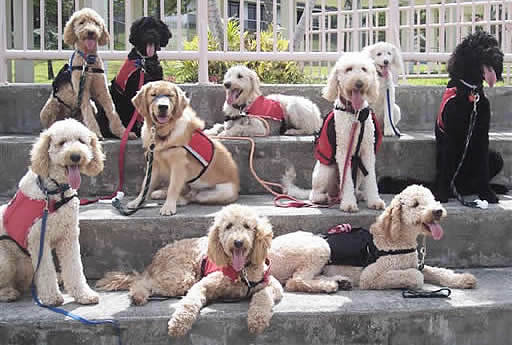
This project is tackling a complex problem: why do only about 50% of dogs in working dog programs graduate from their training programs? We depend on these dogs in so many ways—working dogs serve as guide dogs, medical alert and assistance dogs, search and rescue dogs, K9 and military dogs—but they are very expensive to train. It’s a great waste of resources when a dog washes out of one of these programs. Not to mention, the dog would be happier going straight to the life he’ll do best in rather than struggling in a training program for which he turns out not to be suited! (You may have read the story of Lulu, a dog who recently because internet famous after her exit from a bomb-sniffing program.)
Environment (how these dogs are raised and trained) certainly has a lot to do with which dogs succeed and which fail, but so does genetics, and genetics is what we do at Karlsson Lab. So we’re diving in to the problem of figuring out the genetics affecting success and failure in working dogs.
The predisposition of a dog to succeed in any given working dog program is the very definition of a “complex trait”: a trait affected by many different genes, interacting with each other and with the environment in unpredictable ways. These are the types of problems that attract our lab; we also study cancer and OCD, which are also both great examples of complex traits. Understanding the genetics behind these kinds of traits is super difficult, because untangling the effects of genetics and environment is not a straightforward problem.
The approach Karlsson Lab takes to most of these complex trait problems is sample size: get as many samples as possible and hope that they swamp the environmental effects. This is, of course, the approach we’re taking with the Darwin’s Dogs project and its task of finding genes associated with different behavioral traits in dogs. The Working Dogs Project is very similar to Darwin’s Dogs, in fact, in its focus on behavioral traits. Darwin’s Dogs uses a massive number of survey questions from owners to characterize each dog’s behavior (thank you all so much for all of this data!). The technical term for this is “phenotyping”—describing the characteristics that we’re interested in (versus “genotyping,” describing the genetics that we will use in our analysis).
Unlike Darwin’s Dogs, however, we can’t ask the trainers of working dogs to fill out a massive survey about their dogs. If we did, we’d get many fewer responses, and remember that a large sample size is one of our goals. (I like to say we want “zillions” of working dogs, while Elinor will simply say we want “all of them.”) We have to work with the data that the different training organizations already collect.
This is the central challenge of the Working Dog Project. There are lots of different kinds of working dogs out there! Are the behaviors that make a dog a bad fit for a bomb sniffing job the same behaviors that make them a bad fit for a guide dog job? (Some behaviors yes, some no.) There are also a lot of different working dog training programs, and they all collect different data about their dogs. Can I compare these different pieces of data, or are they apples and oranges? My first job is to start learning about what kinds of data different groups collect, and try to make sense of it for a rigorous analysis.
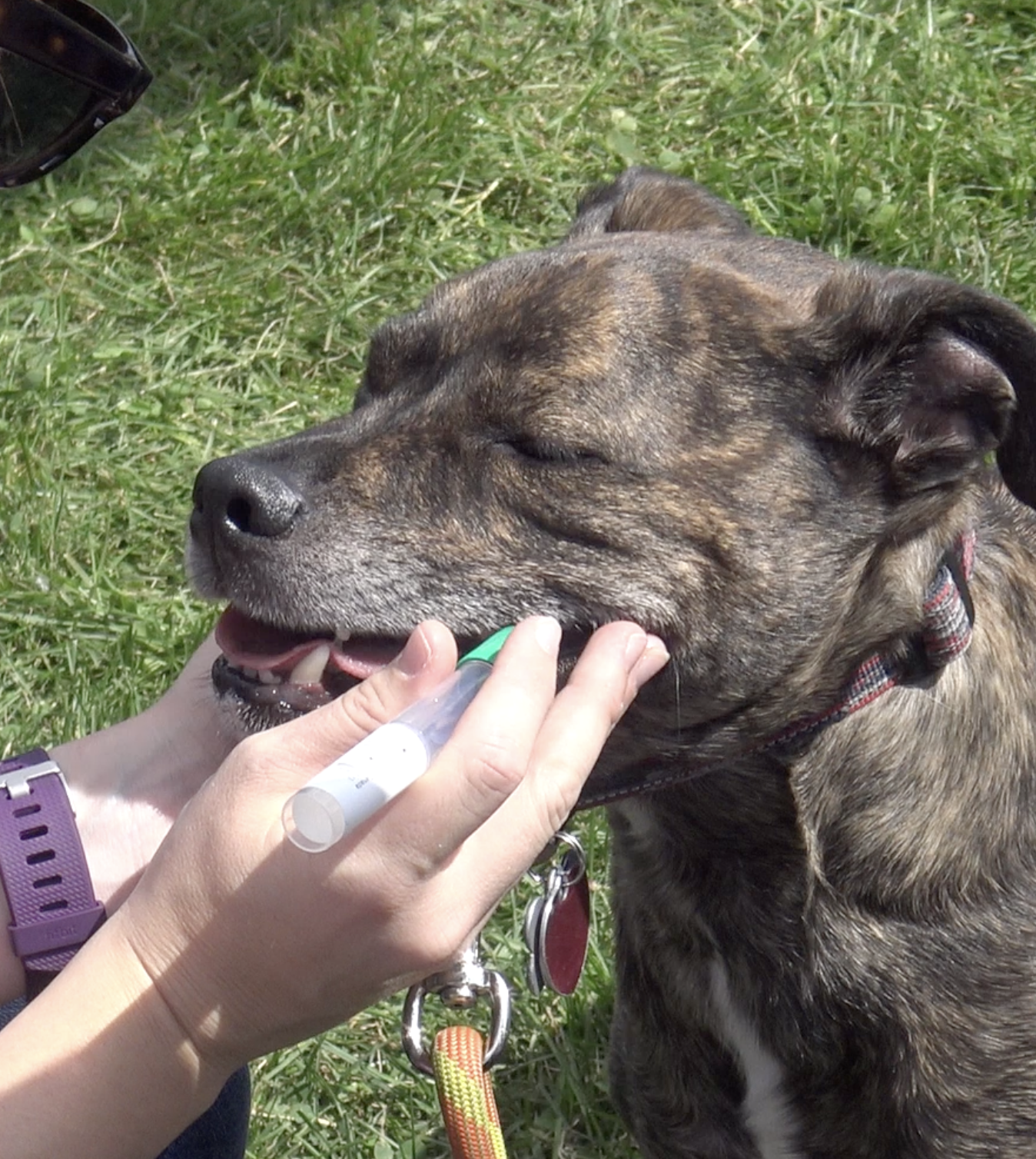
When it comes to collecting DNA samples from working dogs, we have a number of initial collaborators who have been great so far. The time will come when we will be finding other groups to help with this, once we have our feet under us a bit more. It’s a funny world, in which collecting and sequencing DNA isn’t the hard part of a project! Welcome to the Genomic Era.
I would be remiss if I didn’t thank our funders. The Theriogenology Foundation and AKC Reunite have been very generous in supporting our first two years. Thank you so much to them!