


The word “scientist” often conjures an image of a specific archetype: white coat, goggles, gloved hands mixing mysterious concoctions or pressing buttons on high-tech instruments. While these are all scientific accessories, they don’t embody who scientists are—curious people seeking answers to complex questions. Science is often seen as something done in fancy labs by people with even fancier academic degrees, but important research is also driven by an unsung group: citizen scientists.
Citizen scientists (or community scientists, as we call them at Darwin’s Ark) are members of the general public who collaborate with professional scientists on research projects. These projects provide opportunities for everyday folks to directly impact research that they’re passionate about. By drawing on community insights and expertise, citizen science can resourcefully overcome funding limitations to advance research in areas that might otherwise face roadblocks.
Citizen science is an especially impactful model for pet research. Roughly two out of every three U.S. households have at least one pet, which means that millions of people care deeply about the health and well-being of the animals we share our homes with. Pet owners aren’t just passionate about their pets—they’re also the foremost experts on their pets’ characteristics. This unique knowledge makes pet owners valuable partners in scientific research.
Darwin’s Ark has seen firsthand how calling on the power of dog lovers can overcome research hurdles to accelerate discoveries. We’re confident that cat lovers will similarly drive significant progress in feline science through our Darwin’s Cats initiative. That’s why we’re thrilled to team up with SciStarter, the largest online hub for citizen science projects, to celebrate Global Citizen Science Month.
“Citizen science” is synonymous with what Darwin’s Ark calls as “community science,” both referring to public participation in scientific research.
100,000 survey responses = 100,000 acts of science
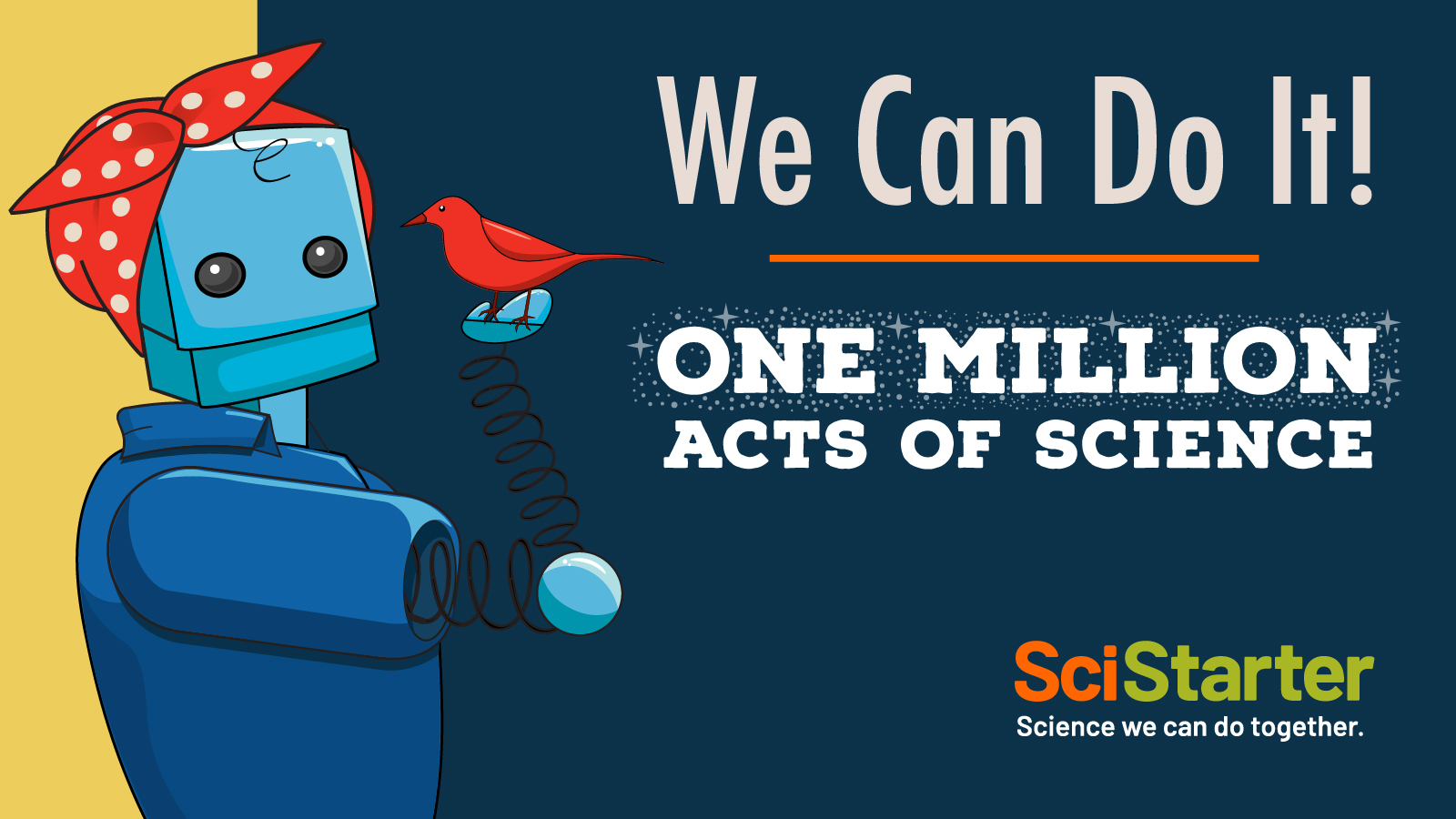
Every April, SciStarter hosts Global Citizen Science Month, a month-long celebration of community-powered scientific research. Throughout the month, SciStarter helps community scientists worldwide—including those involved in Darwin’s Cats—unite in accomplishing One Million Acts of Science. An “Act of Science” is any activity, big or small, that brings the power of the people to scientific research.
As a featured Global Citizen Science Month partner, Darwin’s Ark has set a goal of 100,000 Darwin’s Cats survey questions answered in April. That may sound lofty, but most of our cat surveys have 10 questions, so completing one survey counts as 10 acts of science! In fact, if every cat community scientist completes just two surveys, we’ll reach our goal.
The best part is that these acts of science are fun! You get to talk about your cat while making a meaningful contribution to science—all in just a few minutes. Your survey responses provide phenotypic data (observable information about your cat) that helps our researchers identify patterns in traits across thousands of cats. Phenotypic data is also essential to advancing genetics research, as it helps scientists understand genetic influences on cat appearance, behavior, and health.
Each survey response expands the pool of foundational feline knowledge that our community is building together. We’re working to create the largest repository of feline behavioral and genetics data to explore everything from cat ancestry to behaviors to genetic risks for disease. We can only get there with information from hundreds of thousands—even millions—of answered survey questions.
So join us in celebrating Global Citizen Science Month by taking a survey (maybe two or three?) today! Every survey, every datapoint, every act of science adds up to shift entire fields of research. We’re excited to see what discoveries unfold when we put our hands (and paws) together to collaborate on community-driven research.
No lab coat required: here’s everything you need to participate in Global Citizen Science Month:
- Log in to your Darwin’s Ark Laboratory and take surveys about your pet. (If you don’t have an account, you can create one here.)
- Consider sequencing your cat as part of Darwin’s Cats' genetics research.
- Follow us on Instagram or Facebook to stay up on the latest research and discoveries.
- No cat? No problem! Check out SciStarter’s interactive Citizen Science Month calendar to find another project that interests you. Perhaps the Dog Aging Project, which focuses on helping dogs age healthily and live longer.

