


In March, Darwin’s Cats introduced a groundbreaking approach to DNA sequencing—extracting DNA from fur instead of saliva or blood. This fur-based sequencing method, a first in pet science, exceeded expectations on every front. Fur samples showed a high sequencing success rate and had almost no bacterial contamination compared to saliva. Above all, collecting DNA from fur is practical, noninvasive, and easy—especially for cats, who tend to be uncooperative lab partners.
Encouraged by these promising results, Darwin’s Ark scientists are expanding their research to test the full potential of fur-based sequencing. They’re now exploring whether cat fur can provide the same high-quality genetic data that comes from blood samples, the gold standard for whole genome sequencing. In addition, Darwin’s Ark is partnering with the Center for Zoonomics at Zoo New England to explore whether fur-based sequencing could work just as well for other mammals.
When this next phase of research wraps up, our scientists plan to publish a journal article to provide the broader scientific community with a well-validated protocol for noninvasive DNA sequencing. If ongoing research continues to validate fur samples as a robust and reliable source of DNA, fur sequencing could be widely adopted for advancing pet science, wildlife conservation, and beyond.
Exploring the fur frontier
What began as a simple question—can cat fur be used for genetics research?—has grown into a larger project. Our scientists are now working to understand the full scope of potential applications for fur-based sequencing, and to provide a rigorously validated protocol that other researchers can use in their own work.
While DNA can be extracted from many types of samples, blood is considered the gold standard because it provides the highest quality and quantity of genetic material. One goal of Darwin’s Ark’s ongoing research is to compare the quality of DNA from fur and blood samples.
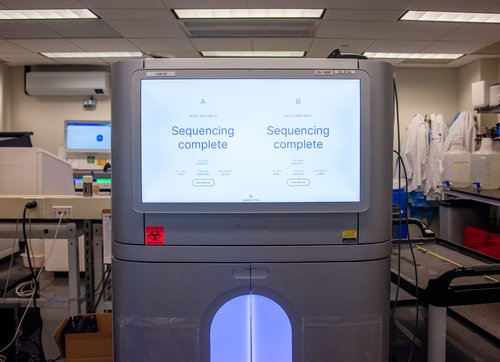
To do this, our scientists are testing both fur and blood using two common approaches to whole genome sequencing: low-pass and high-pass sequencing. Early experiments from Darwin’s Cats show that fur and blood produce comparable results with low-pass sequencing, where all of the DNA in the genome is read roughly once. Low-pass sequencing is a practical method for large-scale genetic studies, and is the same technique that Darwin’s Ark researchers use to sequence pet DNA, whether it comes from dog saliva or cat fur.
When scientists are trying to detect rare genetic variants, or when they’re conducting any experiment that requires very high-resolution genetic data, they turn to high-pass whole genome sequencing. High-pass sequencing reads all of the DNA in the genome 30 times or more. If fur at 30x coverage performs as well as blood at 30x coverage, it could position fur as a viable alternative for high-resolution genetics research.
Beyond performance in low-pass and high-pass sequencing, our scientists are conducting experiments that evaluate important parameters like data quality, reliability, and contamination risks. Fur likely won’t replace saliva or blood in every scenario, but it may exceed what researchers believed was possible from a DNA source that, not too long ago, was largely dismissed due to concerns that the fur shaft provides little usable DNA. Our research aims to set clear, realistic expectations for the method’s strengths and limitations so that scientists can make informed decisions about when and how to use fur in their own genetics research.
Another key question in understanding fur-based sequencing’s broader applicability is: could this method, originally developed for cats, also work for other mammalian species?

Beyond cats: Fur-based sequencing for wildlife conservation
The Center for Zoonomics is a research initiative based at Zoo New England that brings cutting-edge genomics technology to the field of wildlife conservation. Co-founded by Dr. Eric Baitchman (Zoo New England’s Vice President of Animal Health and Conservation) and Elinor Karlsson (Darwin’s Ark Chief Scientist and Director of Vertebrate Genomics at the Broad Institute), the Center was established to connect the conservation community with innovative tools from biomedical science. As a natural extension of this partnership, the Center for Zoonomics is now collaborating with Darwin’s Ark to explore whether advances in fur-based sequencing could provide a noninvasive way to study wildlife genetics.
Darwin’s Ark and Zoo New England are collaborating to test if fur-based sequencing works on different types of fur found in mammals, which can vary greatly in thickness and texture. For instance, a gorilla’s coarse hair is very different from a cat’s soft coat. Will the protocol work across species, or will it need to be adapted to extract high-quality DNA from different types of fur? That’s exactly what this ongoing research aims to uncover.
While Darwin’s Cats kits use a comb to collect fur directly from cats, that approach isn’t practical for non-domesticated animals. Instead, the animal care team at Zoo New England is collecting fur via opportunistic sampling, which means that they’re collecting fur that animals have already shed. “It’s kind of like an Easter egg hunt, but for fur,” said Dr. Rachel Johnston, Zoo New England Director of Conservation Genomics.
This hands-off sampling approach may prove valuable in the wild. Because wild animals tend to avoid people, conservation researchers rarely encounter opportunities to observe them in close proximity. Instead, researchers often find fur left behind in places that animals sleep or visit frequently. If DNA from passively shed fur samples proves to be a feasible sequencing source, it could unlock new and reliable ways to study wildlife genetics and population health, particularly for endangered species. Through this collaboration with Darwin’s Ark, the Center for Zoonomics is advancing conservation research and helping the broader scientific community explore innovative and ethical ways to study and protect wildlife.
What started as a workaround for collecting DNA from squirmy housecats now holds potential for broad applications in advancing genomics and conservation. This expanded research into fur-based DNA sequencing could unlock new opportunities for studying pets, protecting endangered species, and making high-quality genetics research more accessible than ever before.

