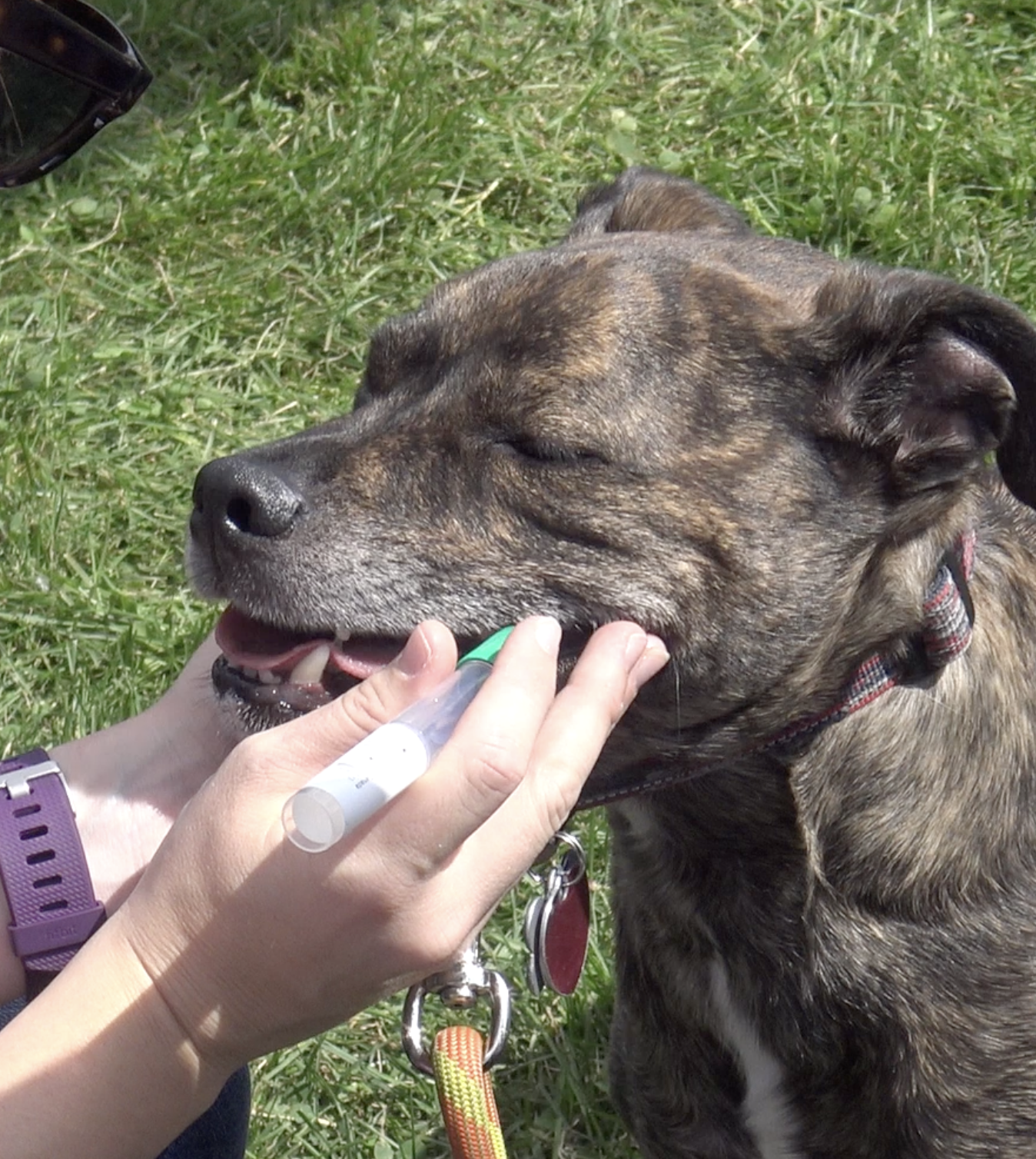


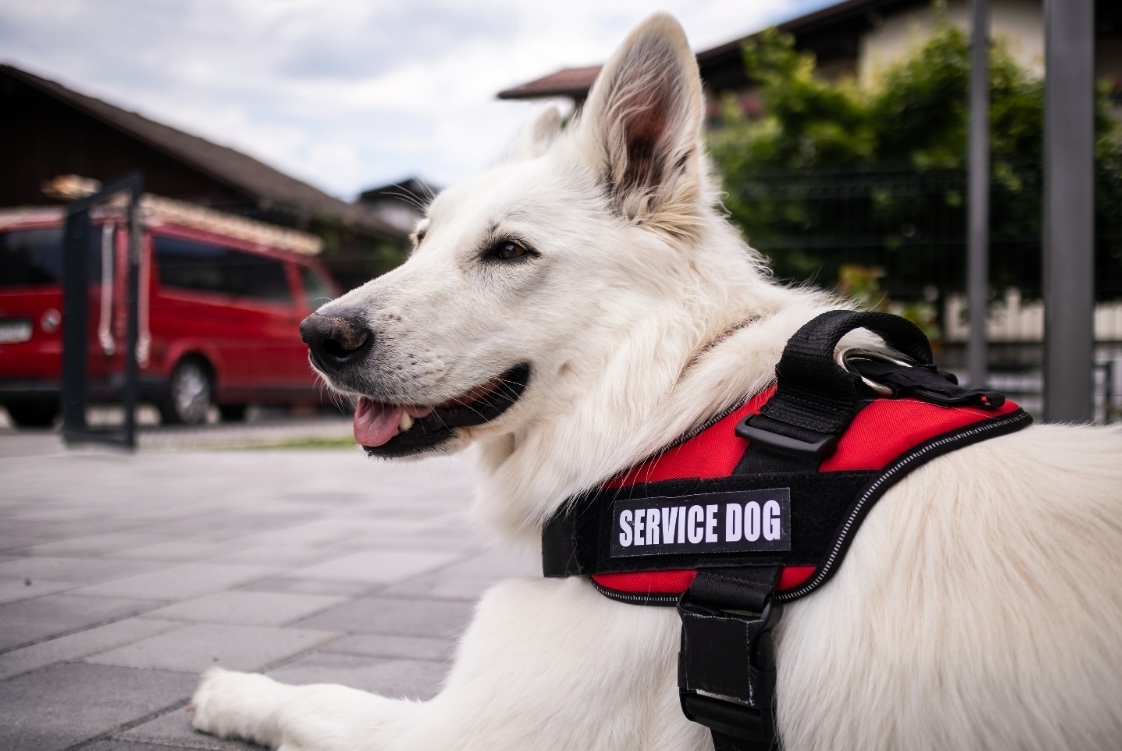
Whether or not you’ve directly used a working dog, you’ve likely witnessed working dogs in action. From search and rescue dogs that are lifesavers in a disaster to guide dogs who help people with disabilities live more independently, working dogs play pivotal roles in our communities.
Demand for working dogs has increased dramatically since 2001, and it’s only expected to grow further as the U.S. population ages. Working dog breeding programs are key to meeting this demand, but they are struggling to keep up. Working dogs must exhibit a variety of complex behavioral traits, such as resisting distractions, feeling comfortable in a harness, and maintaining a steady pace for their human handler. To reliably perform at a high level, working dogs must also be physically healthy. Because traditional selection methods make it difficult for breeders to have certainty that they are selecting dogs with these complex traits, 50-80% of dogs fail to complete working dog training programs.
To help increase the availability of healthy, behaviorally successful working dogs, Darwin’s Ark has partnered with the International Working Dog Registry (IWDR) a nonprofit that provides working dog organizations with breeding selection tools and data management services. Since our Working Dog Project partnership began in 2016, Darwin’s Ark and IWDR have coordinated our respective research that aims to improve both human and dog health. Together, we’re developing cutting-edge breeding tools that incorporate genomic data to help dog breeders raise healthier, higher-performing working dogs for more people.
Darwin’s Ark adds genomic technology to IWDR’s digital toolbox
IWDR is an online registry designed to help working dog breeders track and store their dogs’ data. Breeders use IWDR’s data management system to log health records, pedigrees (a dog’s family tree), and information about a dog’s work performance. IWDR offers a secure platform for breeders to share this data confidentially while using the power of pooled data to generate useful statistics for each dog in IWDR compared to the other dogs in the database. The consolidation of key data allows working dog breeders to track their dogs’ health and performance over generations, enabling more informed breeding decisions with the goal of producing healthier, more capable dogs over time.
Traditionally, working dog breeding selections are made based on observable traits like the potential parents’ physical appearance or behavior. However, a dog’s phenotype (traits that we can see) is not always a reliable predictor of their genetic makeup. To get a better picture of a dog’s full potential, it helps to assess dogs’ traits at the molecular level—and that’s where Darwin’s Ark’s genetic expertise comes in.
Darwin’s Ark scientists specialize in using genomic sequencing technology to advance research discovery in dogs. Our Working Dog Project aims to find genetic markers that influence desirable traits in high-performing working dogs, like responsiveness to human instruction, strong sense of smell, and the ability to work in new environments without anxiety. The partnership between Darwin’s Ark and IWDR is helping to incorporate genomic information into dog breeding tools, ultimately empowering breeders to use the latest advancements to raise healthy puppies with the best genetic potential for success.
Healthier working dogs through genetic selection
One of IWDR’s most powerful tools helps breeders identify which dogs are most likely to pass desirable traits to their puppies. IWDR’s tool makes breeding selection more quantitative by assigning each desired trait an “estimated breeding value” (EBV). EBVs analyze data from a dog’s entire family tree to give working dog breeders a more accurate way to select the best potential parents. Organizations like Guiding Eyes for the Blind and The Seeing Eye have used EBVs to reduce health conditions like hip dysplasia and improve overall performance in their guide dog cohorts.
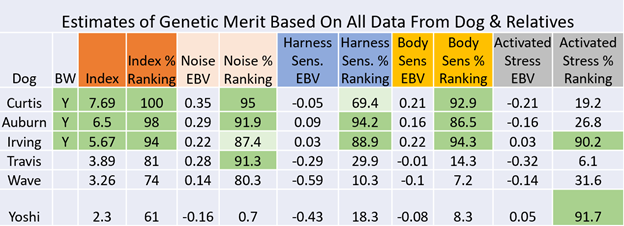
Darwin’s Ark is developing an update to EBVs that would make this tool even more powerful. In partnership with IWDR, we are leveraging our genomics research expertise to develop EBVs that incorporate dogs’ genomic data. Genomic EBVs would enable working dog breeders to screen for desired traits with greater precision and accuracy. Unlike traditional pedigree-based EBVs, which rely solely on a dog’s family history, genomic EBVs would use detailed genetic information alongside family tree data. Genomic EBVs could help breeders identify risk factors or traits that are hard to identify through pedigree and observational data alone.
Additionally, genomic EBVs could help breeders avoid selecting parents with genetic profiles that are too similar to one another. This can lead to inbreeding, which reduces the overall diversity of traits in future generations. Inbred dogs are at a higher risk for developing health problems, which no one wants for any dog, working or otherwise. By considering each potential parent’s genetic makeup, breeders can increase trait diversity and ultimately raise healthier, more successful working dogs.
Finally, genomic EBVs have the potential to predict a dog’s traits based on genetics alone. This is especially important for traits that can take several years to show up, like cancer. Using genomic data, EBVs enable breeders to screen for genetic health risks and select for positive traits early on. However, in order for genomic EBVs to be truly effective, it’s essential to assemble large datasets of consolidated genomic and phenotypic data from thousands of dogs.
Through the Working Dog Project, IWDR and Darwin’s Ark are bringing together dog breeders, statistical geneticists, and genomic research scientists to make genomic EBVs a possibility for working dog breeding programs. While it would be nearly impossible for one organization alone to develop and validate these tools, the partnership between IWDR’s platform for genetic selection with Darwin’s Ark’s expertise in genomic research makes the promise of genomic selection tools a real possibility.
At the same time, the large-scale datasets needed to generate genomic EBVs for breeders will also enable fundamental research into the genetic basis of critical traits like cancer. To understand how complex diseases like cancer develop in dogs, researchers need to study dogs throughout their lifetimes. Darwin’s Ark’s partnership with IWDR creates a more complete picture of a working dog’s life by consolidating information from all of the experts involved in their life—breeders, trainers, veterinarians, and dog owners. This information can then be used not just for working dog selection but also for leading-edge research on canine genetic risk factors that will benefit all dogs.
As our partnership continues to grow, so too will the benefits to working dog breeders, dog owners, and researchers. The next time you encounter a working dog, know that behind the scenes, nonprofits like Darwin’s Ark and IWDR are helping these incredible animals perform their best and assist the people who need them most.
Resources
Want to learn more about IWDR or working dogs in general? Check out the resources below.
- Chen, Frances L. et al Advancing Genetic Selection and Behavioral Genomics of Working Dogs Through Collaborative Science. Frontiers in Veterinary Science. September 5, 2021.
- International Working Dog Registry website: https://www.iwdr.org/
- IWDR Canine Resources: What are EBVs and how do they help?