


Cancer is one of the most prevalent and devastating diseases affecting both people and pets. In the United States, about one in three people and one in four dogs will be diagnosed with cancer in their lifetime. The Darwin’s Dogs Cancer Project was created to help uncover the genetic drivers of canine cancer and to explore what these genetic underpinnings might also tell us about cancer affecting people.
Dogs and humans develop many of the same cancers and are often treated with similar therapies. Despite advances in oncology, cancers remain difficult to predict, prevent, and treat in both species, largely because much remains unknown about how cancer develops.
The Darwin’s Dogs Cancer Project is addressing these research gaps by reshaping how scientists study cancer across species. By combining large-scale genomic analysis with owner-reported survey data, the project helps scientists better understand how a dog’s DNA and environment shape their risk for developing cancer.
By comparing similar cancers in dogs and humans, researchers can identify shared genes and biological pathways that drive disease in both species. Every dog enrolled in the Cancer Project contributes vital data that advances scientific understanding of cancer—potentially leading to better prevention, earlier diagnosis, and more effective treatments for dogs and people alike.
Uncovering genetic drivers of canine cancer
Every person and pup has a unique genetic blueprint that plays an important role in cancer risk. In human oncology, scientists study the genome to identify specific genes that drive tumor formation and growth. This research informs the development of diagnostics, prognostic tools, and treatments designed to directly target cancer-causing genes.
A similar genomics-focused approach is also advancing veterinary oncology. By identifying genes involved in canine cancers, scientists can better understand how tumors form and grow. This knowledge may eventually help veterinarians identify dogs at high risk for developing cancer, detect cancer earlier, and choose treatments that are better suited to each dog’s needs.
The Darwin’s Dogs Cancer Project advances cancer research by studying genomic differences between healthy dogs and dogs with cancer. Through the Cancer Project, Darwin’s Dogs participants may have opportunities to enroll their dogs in research studies as they become available. Previous Cancer Project studies have evaluated diagnostic tools (e.g., blood biopsies) and explored how environmental chemical exposures may influence a dog’s cancer risk.
In addition to Cancer Project studies, Darwin’s Ark scientists collaborate with leading researchers and institutions to expand understanding of canine oncogenomics. With support from the National Institutes of Health, the American Kennel Club, and other organizations dedicated to improving animal health, Darwin’s Ark scientists have uncovered genetic drivers underlying cancers of the bone, liver, and the cells that line blood vessels (the endothelium) in dogs. Notably, these studies have revealed striking similarities between the genomic landscapes of these cancers in dogs and humans.
Although these tumor sequencing studies do not directly enroll Darwin’s Dog participants, they play a critical role in advancing oncology. Together, these research efforts deepen collective understanding of how cancer develops and spreads in both dogs and humans.
Darwin’s Ark’s cancer research uses a comparative medicine approach—the idea that studying disease characteristics across species can ultimately improve health outcomes for humans and animals. Canine studies have yielded new insights into human diseases; the more closely we study how DNA shapes canine cancer, the more we can help both canine and human cancer patients.
Learn more about genetic discoveries that have emerged from tumor sequencing studies led by Darwin’s Ark scientists:

Hemangiosarcoma: Hemangiosarcoma is a common and aggressive canine cancer that affects cells that line the inside of blood vessels. Humans can develop a similar cancer called angiosarcoma, which is nearly impossible to study effectively due to its rarity. Research conducted by Darwin’s Ark scientists, along with colleagues at the University of Minnesota, found that many of the same genes and pathways involved in canine hemangiosarcoma are also present in human angiosarcoma tumors.
In a separate study, Darwin’s Ark scientist Kate Megquier helped identify genetic variants linked to hemangiosarcoma. These variants could help doctors better predict how the disease will progress and support the development of more personalized treatments for dogs and people.

Osteosarcoma: Bone cancer, or osteosarcoma, is one of the most commonly diagnosed canine cancers. Darwin’s Ark scientists led a study that, for the first time, mapped the genetic makeup of canine axial osteosarcoma, a rare and aggressive bone cancer that begins in a dog’s jawbone. Their findings showed that genes linked to canine axial osteosarcoma are also involved in more common forms of bone cancer in both dogs and humans, suggesting shared genetic drivers across species.
Darwin’s Ark’s scientists also reported the first whole-genome characterization of canine osteosarcoma cell lines. This research provides a critical foundation for improving how preclinical laboratory research informs the design of clinical studies of canine osteosarcoma.

Hepatocellular carcinoma:
Hepatocellular carcinoma (HCC) is the most common primary liver tumor in both humans and dogs. In humans, HCC accounts for about 90 percent of liver cancer cases, many of which do not improve with chemotherapy, radiation, or immunotherapy.
Aside from humans, dogs are the only animal that naturally develop HCC. Darwin’s Ark scientist Kate Megquier contributed to a collaborative study that revealed strong similarities between liver cancer in dogs and humans, including the major cell types involved and how those cells communicate with one another.
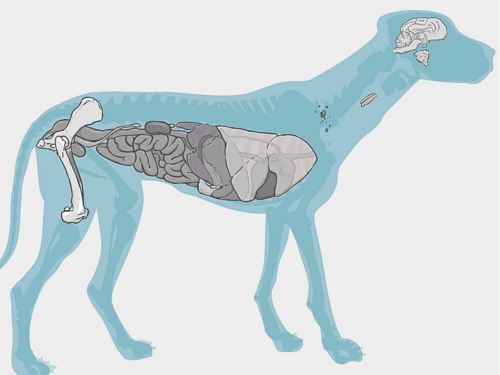
Epigenomics: Epigenomics refers to chemical modifications that change genetic function without altering the base sequence of DNA. Studying epigenomic differences between healthy and cancerous tissue can reveal important clues about how cancer develops.
In human genetics research, large databases already exist that map epigenomic changes across different tissues. A similar resource did not exist for dogs until Darwin’s Ark researchers developed BarkBase, the first publicly available dog-specific epigenomic resource. BarkBase contains detailed sequencing data from 27 types of dog tissue. This resource is greatly expanding collective scientific knowledge of the canine genome and is enhancing dogs’ role as a powerful natural model for studying human disease.
Across these studies on a wide range of cancer types, one clear theme emerges: canine and human cancers share many of the same driving genetic features. Through comparative genomics, Darwin’s Ark’s cancer research is laying the groundwork for the development of better tools to detect, diagnose, and treat cancer in pets and their people.
How environment shapes cancer risk
A dog’s risk of developing cancer isn’t determined by genetics alone. It’s also shaped by what a dog is exposed to in their environment. Just as exposures to air pollution, cigarette smoke, or hazardous chemicals can influence cancer risk in people, they also affect cancer risk in dogs.
Scientists study environmental risk factors to understand which factors are linked to cancer, and at what levels of exposure. This research helps identify potential hazards so that dog owners can reduce their pets’ exposure whenever possible.
One of the reasons why cancer risk is especially tricky to predict is because an individual’s DNA and environment—and their respective influences on cancer risk—interact to further compound cancer risk. Some environmental carcinogens can damage DNA and trigger genetic mutations that cause healthy cells to become cancerous. The likelihood of this happening depends on an individual’s unique genetic makeup. Gathering more data on what does (and what does not) increase cancer risk in dogs helps scientists untangle the relationships between DNA, environment, and cancer.
The Darwin’s Dogs Cancer Project is exploring these environmental risk questions through targeted research efforts and owner-reported surveys. Last year, the Cancer Project examined dogs’ exposure to hazardous chemicals released from the 2023 Norfolk Southern train derailment in East Palestine, Ohio.
The Cancer Project also encourages all Darwin’s Dogs participants to complete the canine cancer survey available in your Laboratory. This survey helps researchers compare environmental and lifestyle factors between dogs who have had cancer with those who have not.
Turning love for dogs into lifesaving science
Pet dogs are powerful partners in cancer research, not only because dogs and humans share similar environments, but also because cancer in both species shares many of the same genetic drivers. By comparing cancer patterns in both species, scientists can better identify how genetics and the environment influence cancer risk in pets and their people.
Dog owner surveys, such as our canine cancer survey, are a critical part of this work. Learning more about canine cancer patients (as well as dogs who have not had cancer) helps researchers identify patterns that would otherwise remain hidden, informing efforts to improve prevention, early detection, and treatment.
When dog owners take part in the Darwin’s Dogs Cancer Project, they aren’t just helping their own pet—they’re contributing to research that serves to improve cancer care for dogs and humans alike. Through community science, they are turning their love for dogs into a lasting and hopeful future for canine and human health.
Papers referenced
- Megquier K., Turner-Maier J., Swofford R., et al. Comparative Genomics Reveals Shared Mutational Landscape in Canine Hemangiosarcoma and Human Angiosarcoma. Molecular Cancer Research. Online September 30, 2019.
- Estabrooks T., et al. Identification of genomic alterations with clinical impact in canine splenic hemangiosarcoma. Veterinary and Comparative Oncology. Online September 21, 2023.
- Husted C, Adrianowycz S, Megquier K, et al. Characterization of the genomic landscape of canine oral osteosarcoma reveals similarities with appendicular osteosarcoma. PLoS One. Online June 10, 2025.
- Megquier K., Turner-Maier J., Morrill K., et al. The genomic landscape of canine osteosarcoma cell lines reveals conserved structural complexity and pathway alterations. PLoS One. Online September 13, 2022.
- Nussbaum, Y.I., et al. Comparative multi-omics evaluation of the tumor microenvironment in dog and human hepatocellular carcinoma. Veterinary Oncology. Online October 23, 2025.
- Megquier K., Genereux D.P., Hekman J., et al. BarkBase: Epigenomic Annotation of Canine Genomes. Genes. Online June 7, 2019.