


We have rolled out updated Genomic Breed Mix results, featuring a new method by which we estimate your dog’s ancestry. By expanding the breed reference panel, we can now detect eight additional breeds: American Pit Bull Terrier, Bearded Collie, Belgian Malinois, Chinook, English Shepherd, Entlebucher, Saluki, and Tibetan Mastiff. The full list of breeds in our current panel can be found in the FAQs.
If your dog has been sequenced, then they may have updated “Version 2” results available. When you navigate to your dog’s profile via My Laboratory, you can find their Genomic Breed Mix. If your dog doesn’t have breed ancestry results, you can check out the Version 2 results for one of our very first participants, Jenny.
How did we get these results?
This new approach takes an expansive view of breed ancestry by modeling which combination of breeds most likely produce your dog’s unique genetic sequence. We estimate a dog’s breed ancestry by comparing their DNA to dogs from 101 different breeds.
Our algorithm uses information from over 600,000 different genome positions to figure out which breeds are most likely somewhere in your dog’s family tree within the last five generations. With all this data, if one of those 101 breeds contributes more than 2% of your dog’s DNA, we can almost certainly detect it. We can’t yet detect ancestry from non-breed dogs like village dogs, though, or from breeds that aren’t one of the 101 breeds. Ancestry from breeds not in our panel is often attributed to a related breed in the panel instead. For example, a Landseer dog (not in our panel) may come up as a Newfoundland (in our panel).
If your dog's ancestry doesn't match any breed particularly well, you might instead see a large mishmash of breeds, as the algorithm tries recreate a missing breed or genetic ancestry.
What has changed in the algorithm?
This new method for “Version 2” results directly estimates the overall proportions of breeds in a dog’s ancestry. In our previous approach for “Version 1” results, each breed’s contribution might be underestimated due to mismatched or unknown breed calls. For estimating overall percent ancestry from breeds, our new method is more accurate and close to the true totals of breed ancestry.
How accurately is breed ancestry estimated?
We are happy to report that this approach is more accurate than our previous method. By performing 2,000 simulations of mixed breed dogs, we have measured the accuracy of our new approach and breed reference panel. Previously, any breed detected at 5% of a dog’s mix had a 25% chance of being a false call. This chance has been reduced to 1.5%. The estimated percent ancestry also reflects well the true percent. The rate of missing a breed is very low, but does happen sometimes for breeds making up less than 2% of the dog’s mix.
What breeds do we see most often in pet dog ancestry?
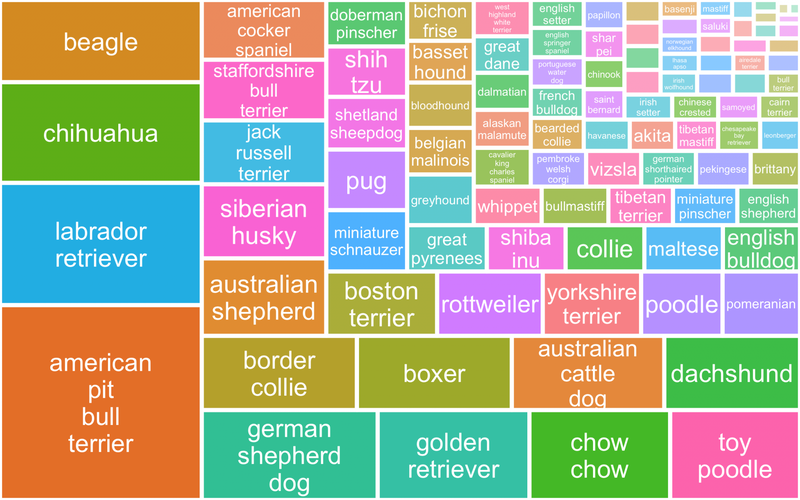
In summary, the big changes from Version 1 to Version 2 breed ancestry results:
- Eight new breeds added (American Pit Bull Terrier, Bearded Collie, Belgian Malinois, Chinook, English Shepherd, Entlebucher, Saluki, and Tibetan Mastiff)
- More accurate method for estimating overall breed ancestry

