


To prod or to prick? Until now, that was the choice facing people interested in exploring their cat’s DNA. That’s because pet sequencing has relied on saliva or blood samples, which require extended cheek swabbing or a visit to the vet to collect. When Darwin’s Ark began developing its cat community science initiative, those options didn’t seem like a good fit for cats—to put it mildly.
“Anyone with a cat will tell you that rubbing a stick inside their mouth for 15 seconds is going to be challenging,” said Dr. Elinor Karlsson, Darwin’s Ark Chief Scientist. “We knew that to collect large-scale genetic data to drive feline discoveries, we needed a better way to collect the DNA—one that didn’t require so much cat wrangling.”
Enter the comb. Darwin’s Ark knew most cats enjoy being brushed, so their scientists began to explore DNA sequencing using fur. Now, thanks to the novel fur-based sequencing method they developed, a few strokes of a cat’s coat can collect the DNA needed to explore the mysteries of cat genetics. This groundbreaking approach is poised to revolutionize pet DNA sequencing, providing a cat-friendly option that will help to accelerate genetic discoveries that improve cat health and well-being.
Breaking barriers in pet DNA sequencing
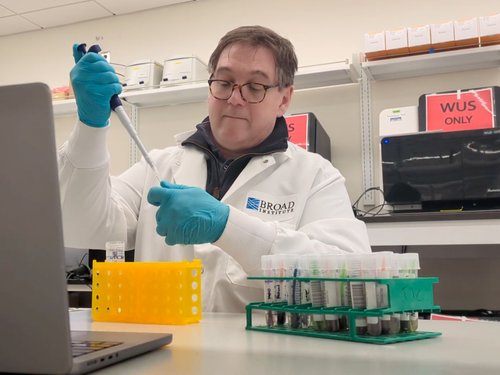
Until now, the scientific community has largely dismissed fur-based sequencing due to concerns that fur provides insufficient DNA for most genetics research. Instead of accepting these perceived limitations, scientists at Darwin’s Ark and the Broad Technology Space put their heads together to develop a sequencing method using cat fur that yields research-quality genetic data.
The result of their efforts is a game-changing approach that is both cat-friendly and scientifically robust. “Fur-based sequencing not only works, it has almost no contamination compared to saliva, which can have up to 40 percent bacterial DNA,” said Karlsson. “This breakthrough will make it much easier to gather sequencing data at the scale we need to transform our genetic understanding of cats.”
Darwin’s Ark scientists knew that in addition to proving fur-based sequencing could be done, they also had to make it practical and scalable. Dr. Chad Nusbaum, Darwin’s Ark Board Member and long-time sequencing technology leader, was a core member of the development team. He explained, “We had to design a collection method that was easy for cat owners and engineer a workflow that could cost-effectively process thousands of samples.”
The collection process they developed couldn’t get much easier for cats and their people. All that is required is 5-10 strokes of the cat’s coat, something most cats already enjoy. The fur is collected with a small plastic comb and placed in a tube, which is mailed to the sequencing lab. “One of our early R&D pilots collected the fur in a plastic bag,” said Nusbaum, “but when the fur started flying due to static electricity, we realized we had to find a way to extract the DNA directly from the container the fur sample arrives in. A standard lab tube turned out to be a great solution that has other benefits too, including using robots to reduce the manual steps in the sequencing process.”
With the pilot phase complete, Darwin’s Ark is ready to bring its novel sequencing method to thousands of cats. With 5,000 cats enrolled since last spring, Darwin’s Cats is the world’s largest community-powered feline research study and the first pet genetics project to use fur-based DNA sequencing.
Darwin’s Ark is now testing its sequencing method with dog fur, and Nusbaum thinks there could be applications beyond pet science. “Now that we’ve built the tools, I believe they can open the door to important genetics research on other species where traditional DNA collection methods are impractical, including endangered wildlife.”
Shaping the fur-ture of feline genetics
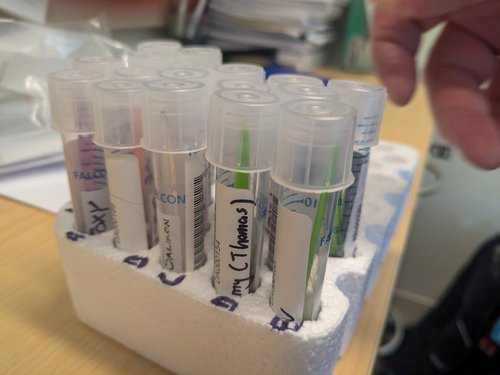
Darwin’s Cats is now ready to use its groundbreaking sequencing method to transform scientific understanding of our favorite felines. “Cats are one of the least-studied companion animals in genomics and, as a result, we are missing out on so much of what genetics can tell us about their ancestry, behavior, and health,” said Karlsson.
Darwin’s Cats aims to build the most comprehensive feline behavioral and genetic database ever assembled to explore the many unanswered questions about cats. What genetic factors influence appearance and behavior? How have cats evolved alongside humans? Why do some cats develop certain diseases while others don’t? And countless more that fascinate researchers and pet lovers alike.
While this type of scientific discovery is often thought to be the purview of professional researchers in high-tech labs, Darwin’s Ark believes new understandings of cat genetics are best achieved in collaboration with cat owners. Darwin’s Cats hopes to collect survey data on 100,000 cats and sequence 5,000 cat genomes in the next year—milestones that cannot be reached without the help of cat lovers everywhere.
So, if you’ve ever wanted to be part of research exploring the question: why does my cat do that? now’s your chance. Join Darwin’s Cats to help drive genetic discoveries that will improve the health and well-being of all cats.

