


Last month, headlines howled with news of the dire wolf’s de-extinction, a breakthrough in gene editing that thrilled genetic researchers and Game of Thrones fans. While the limelight has been on this long-lost canine, Darwin’s Ark affiliate scientists have been studying a different kind of wolf—one that’s been living among us for decades.
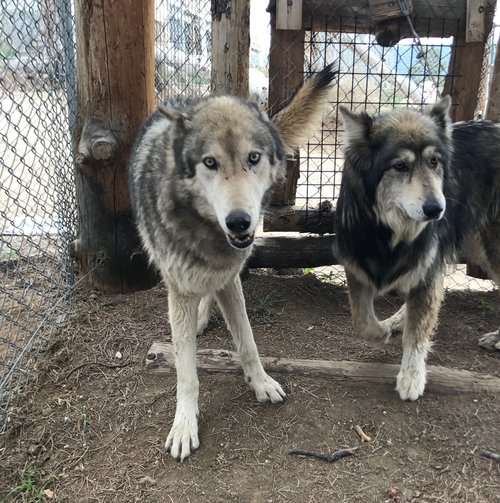
Wolf-dog hybrids are the offspring of wild wolves and domestic dogs. They’re controversial “pets” that are often surrendered to sanctuaries due to their unpredictable behavior and illegal status in many areas. But what makes these animals challenging pets also makes them fascinating scientific subjects. Wolf-dog hybrids’ unique genetic makeup gives researchers a rare opportunity to explore the genetic foundations of both dog and wolf behaviors in a single population.
Darwin’s Ark scientists are working with wolf sanctuaries, including Lockwood Animal Rescue Center and Wolf Hollow, to identify genes linked to behavioral adaptations that distinguish dogs from their wild ancestors. This research could offer broader insights into dog domestication and the role of genetics in shaping canine social behavior.
Dog domestication: from pack hunters to people pleasers
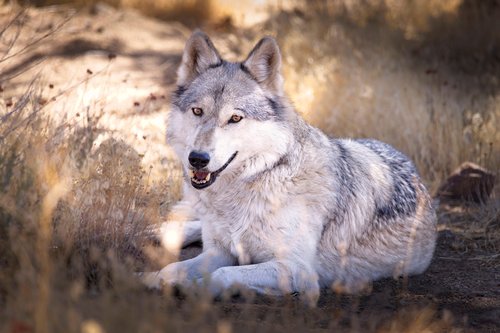
Despite their common ancestry, wolves and dogs faced distinct evolutionary pressures that caused their behaviors to diverge. Wolves adapted to survive in the wild: they’re territorial, live in tight-knit packs, and usually avoid human contact. Dogs, on the other hand, were domesticated over thousands of years to live alongside humans. Domestication made dogs more sociable, more adaptable to human environments, and overall more reliant on people for survival. Unlike wolves, dogs are generally more attentive and friendly towards humans, even strangers.
Although they behave differently, wolves and dogs are subspecies, meaning they can interbreed and produce offspring. While wolf-dog matings can happen in the wild, such pairings are rare due to developmental and behavioral differences. Instead, most wolf-dog hybrids are intentionally bred by humans and sold as exotic “pets.”
Because wolf-dog hybrids inherit a blend of wolf and dog DNA, they display a blend of wolf-like and dog-like behaviors. When both wild and domesticated traits are expressed in a single animal, the result is often varied and unpredictable behavior. For this reason, many wolf-dog hybrids eventually become too difficult for their owners to manage, and they are surrendered to sanctuaries.
Wolf-dog hybrids offer a two-in-one approach to behavioral genetics
Wolf sanctuaries provide specialized care for wolf-dog hybrids. For researchers, these sanctuaries offer safe, controlled environments for studying canine genetics and behavior.
One major challenge in behavioral genetics research is distinguishing inherited traits from those shaped by environmental factors. Because wolves and dogs have vastly different early developmental experiences and levels of exposure to humans, it’s difficult to isolate the genetic underpinnings of their behaviors by comparing the two subspecies side-by-side. The Wolf-Dog Hybrid Project overcomes this challenge by studying hybrids that carry both wolf and dog DNA. This approach allows scientists to control for environmental variables and more directly study the genetic roots of behavior—not just behaviors typical to each subspecies, but also how those behaviors shifted during dogs’ evolution from wolves.
Through the Wolf-Dog Hybrid Project, Darwin’s Ark scientists work with wolf sanctuaries to sequence hybrid genomes and measure each animal’s proportion of wolf versus dog DNA. Then, through carefully designed behavioral tests, they observe how each hybrid responds to unfamiliar objects and unfamiliar people—behaviors that differ dramatically between wolves and dogs.
By comparing behavioral data with genetic data, Darwin’s Ark scientists are pinpointing genomic regions linked to wolf-like or dog-like behaviors. This work offers insights into how certain behaviors, particularly social behaviors unique to dogs, may have evolved.
Findings from the Wolf-Dog Hybrid Project are expected to be published by late 2025. This research could deepen our understanding of genetics’ influence on canine social behaviors, and shed light on the evolutionary journey that shaped dogs into our closest animal companions.

