


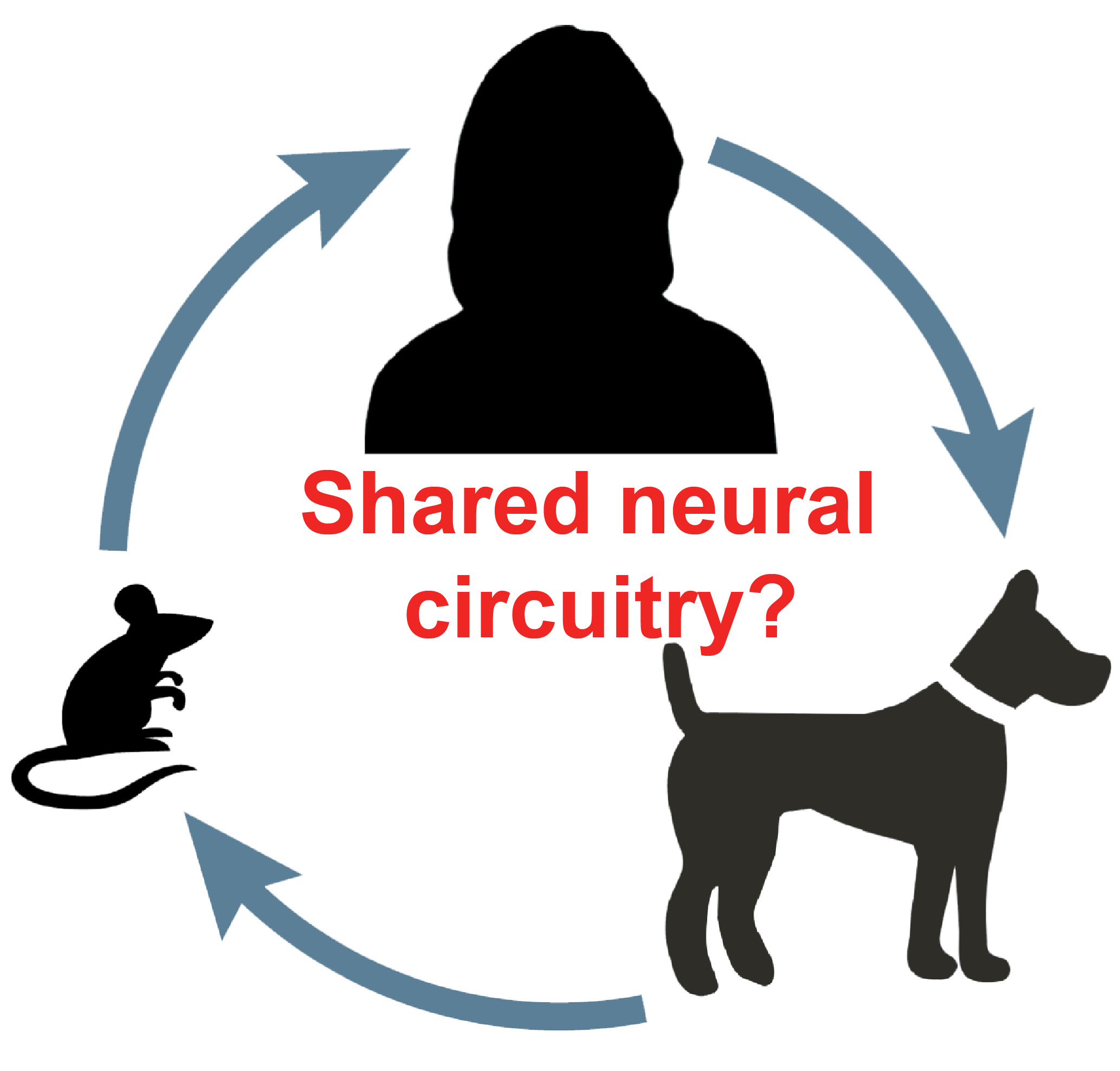
This week, we published a study (Noh et al., Nature Communication 2017) where we identify genetic variants that are associated with human obsessive-compulsive disorder (OCD). We used a new approach that combined information from studies in dogs and mice, as well as studies of autism in people (people with autism often show compulsive behaviors). Although we are still far from fully understanding the underlying causes and mechanisms of OCD, our study finds four genes where genetic mutations were more common in people suffering from OCD. Investigating the function of these genes tells us about the neurobiology of OCD, and may one day lead to new therapeutic targets.
Here, I would like to share the backstory of our paper, to illustrate how we ended up utilizing dog genetics to guide human psychiatric research.
As you may have seen in our previous blog posts, dogs are a great model for the study of behavior. They have evolved alongside us for thousands of years, helping us on various tasks like herding and hunting. Intriguingly, some dogs have behavioral disorders that share similarities with human psychiatric disorders, suggesting that research on those dog behavioral disorders might help to uncover the genetic basis of human psychiatric disorders.
Many people have suggested that canine compulsive disorder (known as CCD) might be a natural model for human OCD. A natural model is an animal that exhibits a disease while living in their natural environment, and not as the result of human manipulation. Both dogs with CCD and people with OCD exhibit time-consuming, harmful repetitive behaviors, and both have partial improvements when treated with Prozac and other selective serotonin reuptake inhibitors.
In 2010, we identified a region in the dog genome that is strongly associated with CCD (specifically, compulsive flank sucking or blanket sucking), by analyzing only 160 Dobermans (Dodman et al. 2010 Molecular Psychiatry). I say ‘only’ 160 dogs, because if we used the same method to study human OCD, we would have needed to analyze tens of thousands of human genomes – something no single study in psychiatric diseases had achieved at that time. Even today, such a large sample set has been achieved for only a few psychiatric diseases, and not for OCD.
We followed up on that surprisingly successful study by looking at more dog breeds. In addition to Dobermans, we included German Shepherds, Shetland Sheepdogs, and Jack Russell terriers. We found four genes that are influenced by genetic variants present only in dogs with CCD (Tang, Noh et al. 2014 Genome Biology). None of the genes had been connected to OCD, but three (CDH2, CTNNA2, ATXN1) were known to be involved in human brain function. This suggested we were on the right track; studying CCD in dogs could also help us find genetic risk factors for OCD in humans.


