Darwin's Cats
  • About us
    • Our story
    • Team
    • FAQs
    • Contact us
  • Our research
    • Darwin’s Cats
    • Darwin’s Dogs
    • Data Sharing & Collaboration
  • DNA sequencing
    • Sequence your pet
    • Gift a kit
    • Register DNA kit
    • Instructions
      • Fur kit instructions
      • Saliva kit instructions
  • News
    • Blog
    • Press room
    • Pet of the month
  • Support our work
    • Donate
Laboratory
My Laboratory
Sign up/Log in
Darwin's Ark

About Us

Our storyTeamFAQsContact us

Our research

Darwin’s CatsDarwin’s Dogs

DNA sequencing

Sequence your petDNA kit registrationGift a kitDNA kit Instructions

News

BlogPress roomPet of the month

Support our work

Donate

Join the newsletter

Stay up to date with all of our projects and grow with us.

Follow us

Our partners

Board InstituteUMass Chan

Copyright 2026, Darwin’s Ark

Privacy policyTerms and conditions

Our stories

Blog Home

Blog Home

Meet the Darwin's Cats

By Claire HendershotJuly 16, 2025
behavior

Behavior

cats

Cats

community-science

Community Science

genetics

Genetics

Curious about the thousands of fabulous felines in the Darwin’s Cats community? Pounce into this cat census based on your survey responses.

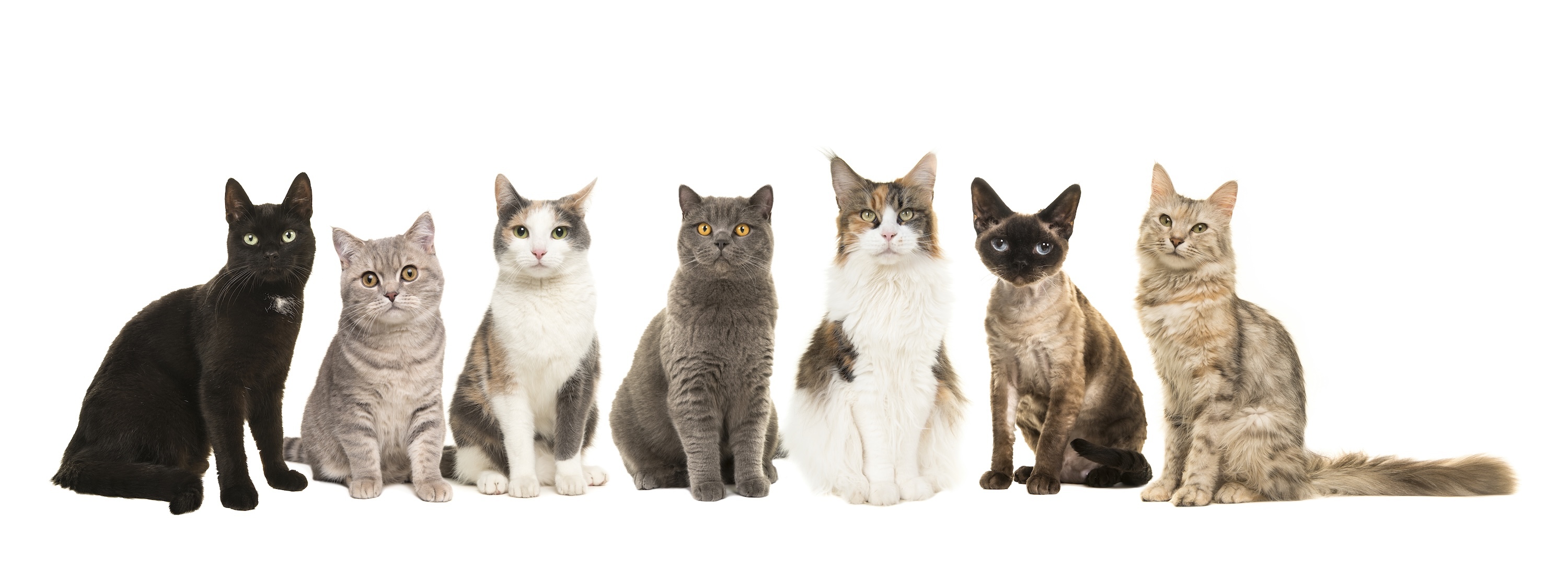
Seven cats with various coat colors and patterns sit in a line against a white background.

Nearly 16,000 cats have joined Darwin’s Cats. That’s a lot of new feline friends, but who exactly are these cats? Where do they live, what do they look like, and what traits make them purr-fectly unique? Here are some fun facts and surprising stats about our community scientists’ cats.

What’s your cat’s age and sex?
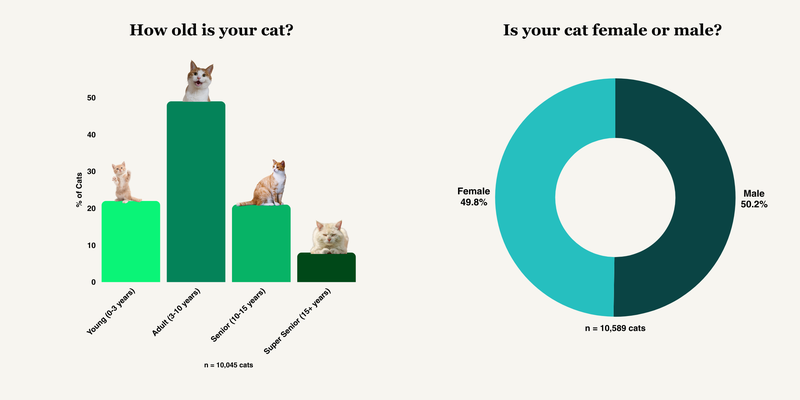
Your cat’s physical appearance, temperament, and health may change as they age. Age data helps our scientists understand how behaviors and health conditions emerge, evolve, or fade over time.

Just like some traits are influenced by a cat’s age, some traits are sex-specific. For example, nearly all calico cats are female, and most orange cats are male. Health conditions can also be more prevalent in one sex than the other. Knowing how many of the Darwin’s Cats are male or female helps our scientists explore how sex shapes other traits. Data from our community’s pet profiles shows that the Darwin’s Cats are split nearly evenly between male and female.

If you haven’t filled out your pet’s profile in your Laboratory, add their sex and date of birth (your best guess is great!) so we can track how traits evolve over a cat’s nine lives.

What’s your cat’s name?
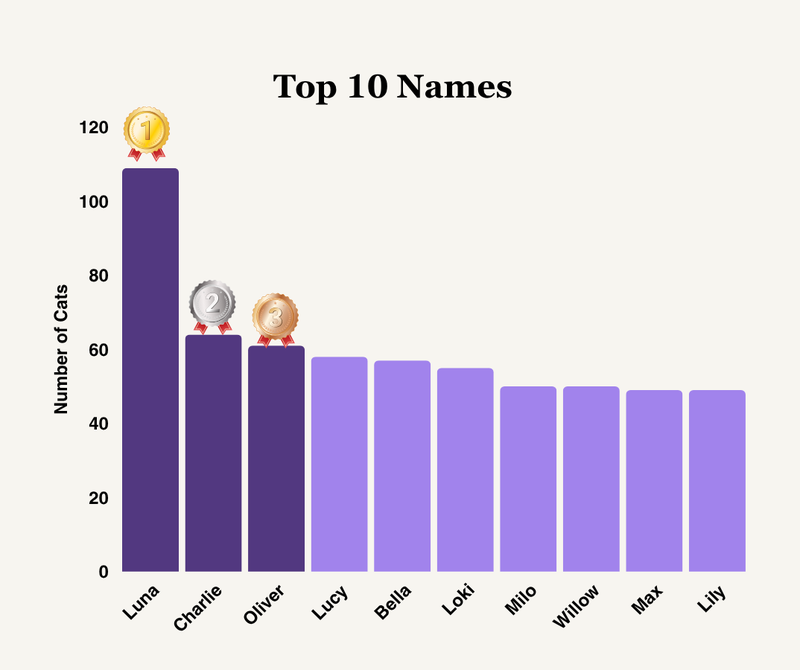
What do you call your furry friend? Here are the 10 most paw-pular names in the Darwin’s Cats community, with one clear winner: Luna!

What does your cat’s coat look like?

Cat coats are a kaleidoscope of different colors, textures, and patterns. Our Coat and Fur survey asks about thirteen distinct fur colors, and that’s just scratching the surface! Cat coats encompass a diversity of striking aesthetics: tabby stripes, tortoiseshell swirls, even variegated fur, where a single strand of fur contains multiple colors.

Unsurprisingly, summarizing all of this visual diversity is incredibly complex, but that’s part of what makes cats so fascinating. Their dazzling array of coat colors and patterns is a beautifully rich resource for understanding how genetics shapes physical traits. As our research grows, we hope to share more fascinating stats about the coat and fur types in the Darwin’s Cats community. For now, let’s focus on two cat coat elements: coat types and tabby patterns.

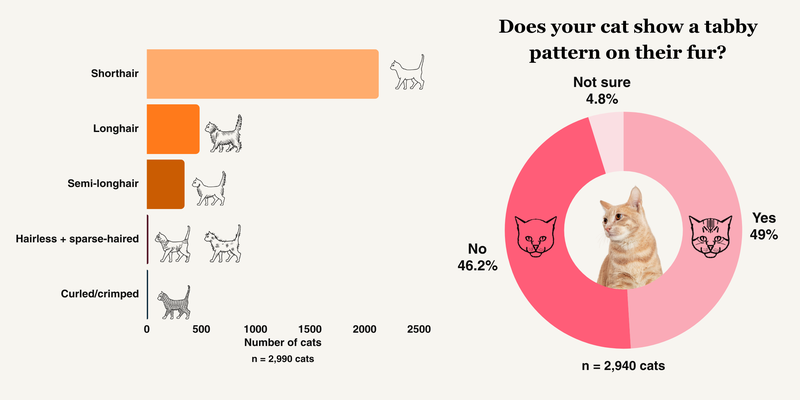
When we meet a new feline friend, one of the first things we notice is their fur—is it long or short, dense or sparse? In the Darwin’s Cats community, shorthairs come out on top!

Related articles

A picture of Balto, one of Darwin's Dogs, walking toward the backyard in his backyard.

What’s Next for Darwin’s Dogs?

Published on September 2, 2026

DNA sequencing is back, and the next chapter of discovery is just beginning.

Read more
The questions that unite pet owners

The questions that unite pet owners

Published on August 19, 2026

From ancestry to aging, the mysteries that fascinate pet owners are the same ones that scientists are working to answer.

Read more

Hairless cats and cats with curly, crimped, or sparse hair are rare gems: less than one percent of all Darwin’s Cats community scientists reported that their cat has one of these unique coat types.

As for coat patterns, about half of the Darwin’s Cats are tabbies, which means that they have a distinctive “M”-shaped marking on their forehead and thin stripes on their face.

Have you taken our Coat and Fur survey yet? Log in to your Laboratory and tell us if your cat is part of the shorthair majority or is a sparse-haired rarity!

Where was your cat born?

We ask about your cat’s birthplace because we’re studying the relationship between geography and cat ancestry. Early analyses of the Darwin’s Cats’ genomes suggest that, like humans, cats’ DNA varies based on their birthplace. Cats born in the same geographic region share more genetic similarities than cats born farther apart. By mapping the geographic spread of cats, scientists hope to piece together the puzzle of where cats came from, their interactions with human and wildcat populations, and why certain traits are more common in specific populations.

World map with green dots representing where the Darwin's Cats were born.

What's your cat's daily environment?

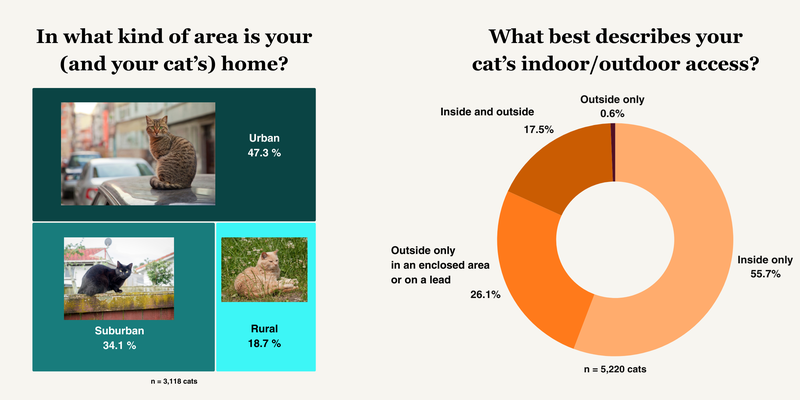
DNA isn’t the only thing that shapes cat traits. Your cat’s environment also plays a big role, especially for complex traits like behaviors and health conditions.

For example, two cats born in New York State may share genetic similarities due to their geographic proximity. However, if one cat lives in a Manhattan high-rise and the other lives on an upstate farm, their daily experiences are likely to be vastly different. The differences in their surroundings, sensory experiences, and the other cats and people they encounter can shape different behaviors and habits.

What kinds of environments do the Darwin's Cats call home?

How many cats live in your household?

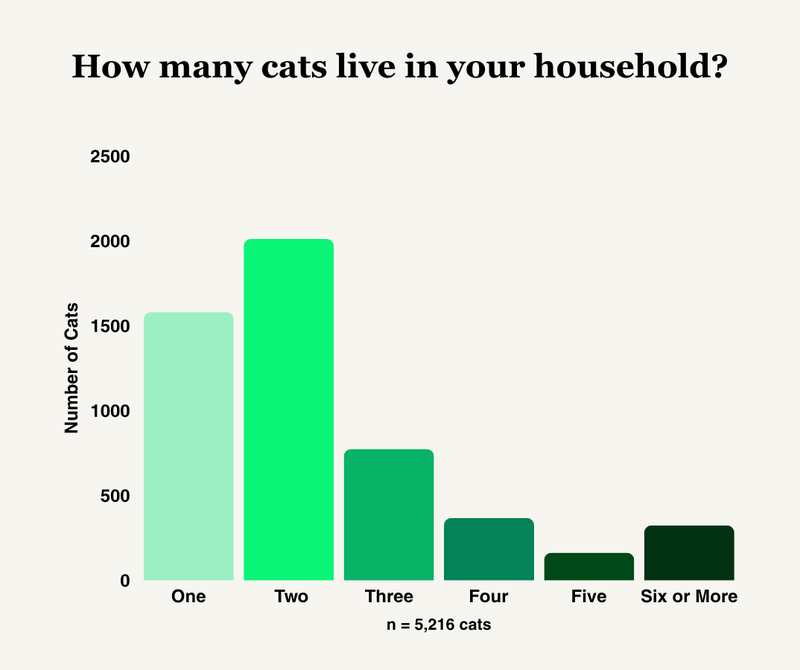
Does your cat rule the roost alone or do they share their domain with a crew of other cats? Roughly one-third of the Darwin’s Cats come from solo-cat households, and roughly one-third are part of dynamic duos. As for the slight spike in households with six or more cats, most of those responses come from cat shelters or sanctuaries.

Does your cat have any of these common feline health conditions?

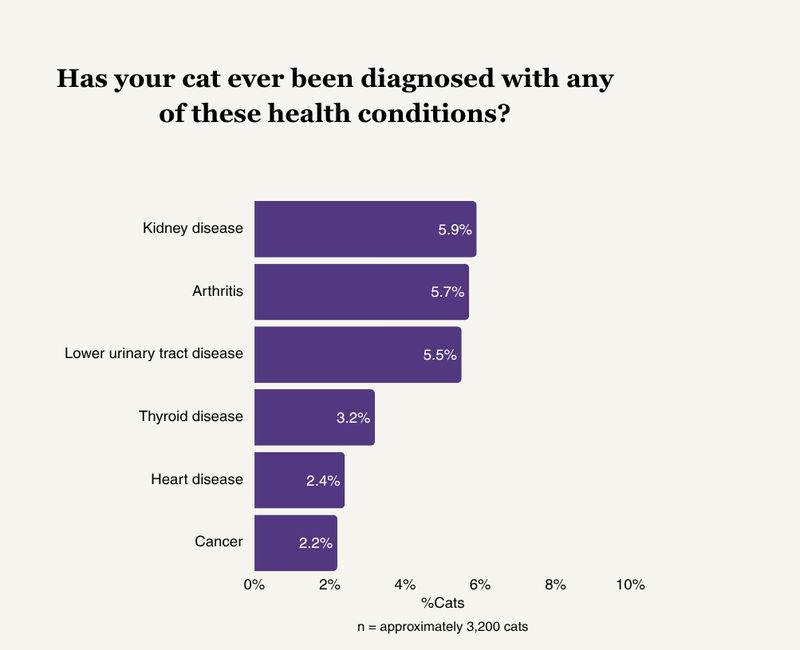
Our Well-being survey focuses on the prevalence of seven common cat health conditions. (We know there are many more, and plan to include them soon in new health-focused surveys.)

So far, the results show that around one in every 20 Darwin’s Cats has been diagnosed with kidney disease, arthritis, or lower urinary tract disease. About one in every 30 Darwin’s Cats has been diagnosed with thyroid disease. Heart disease and cancer affect about one in every 45 Darwin’s Cats.

Health conditions result from complex interactions between genetics and environment. That’s why our research is building a foundational understanding of both of these factors by decoding your cat’s DNA through whole genome sequencing, and gaining insight into your cat’s daily life through surveys. By bringing together genetic and lifestyle data, we’re building a more complete picture of cats so that we can better support what matters most to all of us: improved long-term health and happiness for cats everywhere.

Make sure your cat is included in the future of feline research by updating your pet’s profile and taking surveys in your Laboratory. Every detail you share brings us one step closer to understanding what makes each cat, including yours, purr-fectly unique.