


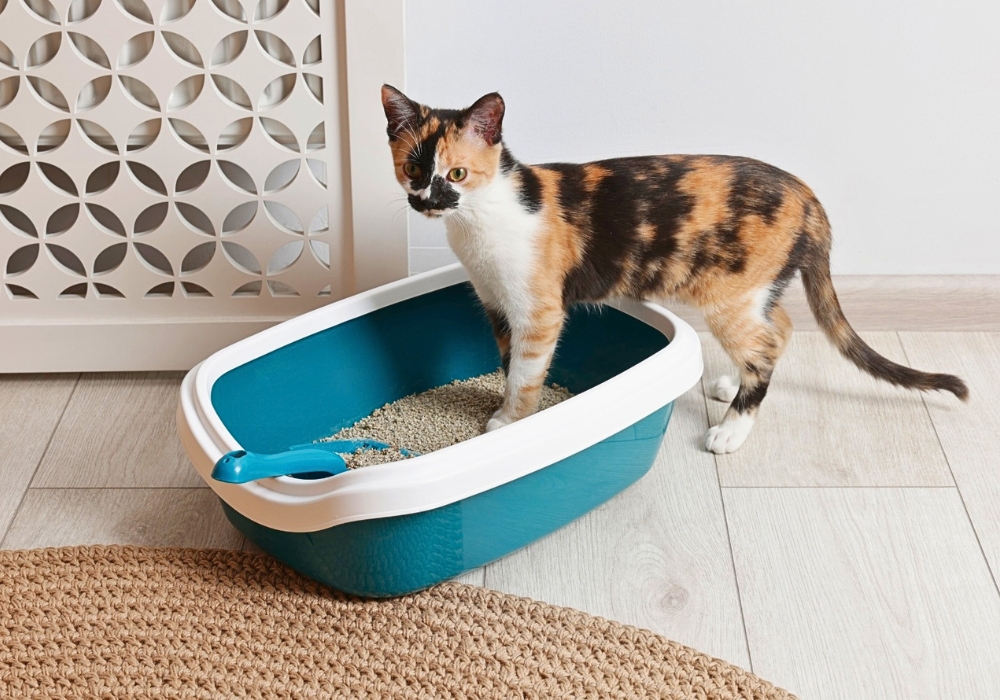
Darwin’s Cats recently launched its first survey focused entirely on a specific category of health conditions—cat urinary health. Urinary issues, such as urinary crystals, bladder inflammation, and feline lower urinary tract disease (FLUTD), are common in cats, particularly as they age. Yet despite their prevalence, many cases go unreported and their root causes remain poorly understood. This lack of baseline data has limited researchers’ ability to understand how frequently these conditions occur, their impact on cats’ behavior and quality of life, and what genetic or environmental factors may contribute to their development.
The new survey gathers information about cats’ urinary health history, litter box habits, and related behaviors that may indicate underlying medical problems or behavioral issues. Researchers hope that collecting this data at scale will identify genetic components of urinary conditions and improve understanding of how a cat’s home environment can be modified to better support their urinary health and overall well-being.
Litter box habits offer health insights
Urinary issues are common in cats, with older cats at increased risk. These health conditions can affect different parts of a cat’s urinary system, including the lower urinary tract (bladder and urethra) and kidneys.
It’s hard to say exactly how many cats experience urinary issues, in part because many cases go unreported. Sometimes, cat owners feel embarrassed about their cat’s litter box behaviors, or they may not realize that subtle changes in their cat’s toileting habits indicate a medical problem.
Many urinary problems manifest as changes in litter box behaviors. A cat may cry out while using the litter box, strain to urinate, urinate more frequently, or start using a laundry pile in lieu of the litter box. Although these behaviors can be frustrating or confusing, they’re often important signals that something may be wrong. Recognizing these changes and seeking veterinary care early can help identify and treat health problems before they become more serious.
At the same time, urinary symptoms don’t always point directly to a problem confined to the urinary tract. Sometimes, the root cause of urinary issues is a broader health condition affecting other parts of a cat’s body. For example, increased thirst and frequent urination are often early signs of diabetes, hyperthyroidism, and other metabolic conditions.
“The bigger picture of a cat’s health can show up in a urinary context,” said Lauren Baker, DVM, PhD. Baker is an assistant professor of companion and working animal biology at the University of Wisconsin-Madison. She also helped design Darwin’s Cats’ urinary health survey.

Baker became connected with Darwin’s Cats after meeting Darwin’s Ark Chief Scientist Elinor Karlsson at a 2025 conference, where Karlsson presented research from the initiative. Like Karlsson, Baker is a cat lover who has long wanted to study cats but was limited by the lack of feline-specific genetic research tools.
One of Baker’s research interests is feline idiopathic cystitis (FIC), an inflammatory bladder condition that affects many cats but has no clearly identified cause. FIC is often linked to stress, though scientists are still working to understand how and why stress can trigger the condition in some cats.
Because so much about FIC remains unknown, it’s considered a diagnosis of exclusion, meaning that veterinarians diagnose FIC only after ruling out more familiar or easily explained causes of urinary symptoms. As a result, Baker’s research into FIC has also given her expertise in a broad range of feline urinary conditions.
So when Karlsson invited Baker to help design the Darwin’s Cats urinary health survey, she was excited to contribute her knowledge.
“Urinary issues could have all sorts of genetic drivers,” Baker explained. “Darwin’s Cats’ research could really help explain things like which cats are at a higher risk for developing these conditions at an earlier age. If we can identify which cats are predisposed to urinary conditions, then we can intervene and support their health before problems start.”
Those interventions could include medical treatments, changes to diet and hydration, or adjustments to a cat’s home environment. But in order to identify genetic risk factors or potential prevention strategies, researchers first need better data about how urinary problems appear in the pet cat population.
Better data collection = better scientific understanding
The Darwin’s Cats urinary health survey aims to collect reliable data on how many cats experience urinary health issues or unusual litter box behaviors. Although cat owners should always consult a veterinarian if their cat shows signs of pain, difficulty urinating, or sudden behavioral changes, surveys are a practical way to gather information on large numbers of cats—especially for conditions that are poorly understood or frequently undocumented.
The survey asks cat owners whether their cat has ever been diagnosed with a urinary health condition. These conditions range from urinary tract infections and bladder or kidney stones to feline lower urinary tract disease (FLUTD), an umbrella term for several conditions that cause inflammation in a cat’s bladder or urethra.
The survey also gathers information about urinary blockages, which is when a cat cannot pass urine. Urinary blockages require emergency veterinary care and can quickly become life-threatening. Warning signs of a blockage include frequent crying or straining in the litter box while producing little or no urine.
In addition to formal diagnoses, the survey explores everyday litter box behaviors that may offer insights into a cat’s health. Questions cover topics such as the size of urine spots in litter, vocalizations during urination, and if your cat ever urinates outside the litter box.
Some of these behaviors may indicate an underlying medical problem, while others can reflect stress or problems that may be improved through changes to a cat’s home environment.
“Urinary issues almost always have an explanation,” said Baker. “Your cat isn’t peeing outside the box because they’re mad at you—it’s because there’s something going on. There could be something wrong with the litter box or its location. There could be inter-cat aggression that you’re not perceiving, or there’s a medical problem.”
The future for felines and their families
Regardless of the underlying cause, chronic urinary issues can strain the bond between cats and their humans. In fact, severe urinary problems are among the leading reasons cats are relinquished to animal shelters. Researchers hope that changing how urinary conditions are recognized, studied, and discussed will ultimately improve quality of life for both cats and the people who care for them.
Because Darwin’s Cats includes a large and growing community of participants, the initiative may eventually generate sufficient data to investigate how genetic and environmental factors influence urinary health. If survey results show that a large enough number of Darwin’s Cats share a particular condition or behavior, researchers could have enough data to conduct a GWAS (genome-wide association study) to explore whether those traits have a genetic component.
The research could also have implications beyond veterinary medicine. For instance, FIC closely resembles interstitial cystitis (also known as bladder pain syndrome) in humans. The two conditions share similar symptoms, and researchers suspect that stress, anxiety, and neurological factors may contribute to the condition’s development in both species. Studies in humans have found that people with interstitial cystitis are more likely to also experience anxiety disorders, mirroring the stress-related behaviors often observed in cats with FIC.
"Urinary issues almost always have an explanation. Your cat isn’t peeing outside the box because they’re mad at you—it’s because there’s something going on." - Lauren Baker, DVM, PhD
These parallels raise broader questions about the relationship between stress, inflammation, and urinary disease across species. By studying feline urinary health more closely, researchers may improve care for cats as well as advance understanding of comparable conditions in humans.
For cat owners, taking the Darwin’s Cats urinary health survey offers an opportunity to directly support that research. Every response helps build a foundational dataset that identify genetic factors that predispose certain cats to urinary issues and guide future approaches to prevention and treatment. As more cats and their owners participate, researchers move closer to answering long-standing questions about how these conditions develop, and how to better protect the health and well-being of cats everywhere.

