


Kittens may be small, but the first year of a cat’s life is hugely important. Hill’s Pet Nutrition, Darwin’s Cats’ funding and research partner, recently released its 2026 World of the Kitten Report, an evidence-based review of emerging research, veterinary care guidelines, and industry trends related to kitten health and development. Building on the company’s first-ever World of the Cat Report released in 2025, the report synthesizes current scientific knowledge to help veterinarians, researchers, and cat owners better understand kittens’ unique needs.
Rather than viewing kittens as small adult cats, researchers increasingly recognize kittenhood as a distinct life stage marked by rapid physical, behavioral, and social development. Despite kittens accounting for more than half of all cat adoptions in the United States, many questions about their earliest months remain unanswered.
The report highlights recent advances in kitten care while underscoring the need for more comprehensive data on feline health and development. Darwin’s Cats community scientists are addressing those gaps through participation in surveys and DNA sequencing, contributing information that can help researchers better understand how kittens grow, develop, and thrive.
Kitten characteristics beyond cuteness
What is a kitten? Most people would describe kittens as adorable, miniature versions of adult cats, but cuteness is a poor scientific metric. Hill’s World of the Kitten Report asserts that veterinary science is shifting away from treating kittens as “small adults,” and toward recognizing them as animals undergoing the most rapid and consequential developmental period of their lives.
Much like kittens themselves, the exact characteristics of kittenhood were quite fuzzy…until recently. In 2021, the American Animal Hospital Association (AAHA) and the Feline Veterinary Medical Association (FelineVMA) formally defined kittenhood as the first 12 months of a cat's life. This updated framework recognizes kittenhood as a distinct life stage with unique developmental, biological, and social care requirements.

This distinction matters not only to veterinary professionals, but to the millions of people who adopt kittens every year. The ASPCA reports that kittens make up more than half of the 2.2 million cats adopted annually in the U.S. Data from Darwin’s Ark reflects a similar trend: nearly 60% of Darwin’s Cats community scientists adopted their cat at six months of age or younger. Roughly one in five of these kittens were adopted as unweaned kittens of eight weeks old or younger.
Unweaned kittens represent one of the most vulnerable populations of pet cats. Ideally, kittens younger than eight weeks old remain dependent on their mother for warmth, nutrition, immune support, and critical social development. But when that maternal care is unavailable, humans must assume those responsibilities. That means around-the-clock care, gradual weaning from bottle feeding, temperature regulation, and protection from environmental stressors that can affect developing immune systems and brains.
The needs of a four-week-old kitten bear little resemblance to those of a four-month-old kitten, underscoring just how much growth and development occur during this brief period. Yet despite the urgency of kittens’ basic needs—and despite the fact that so many cats enter homes as kittens—we know surprisingly little about early feline development.
Kitten surplus, data shortage
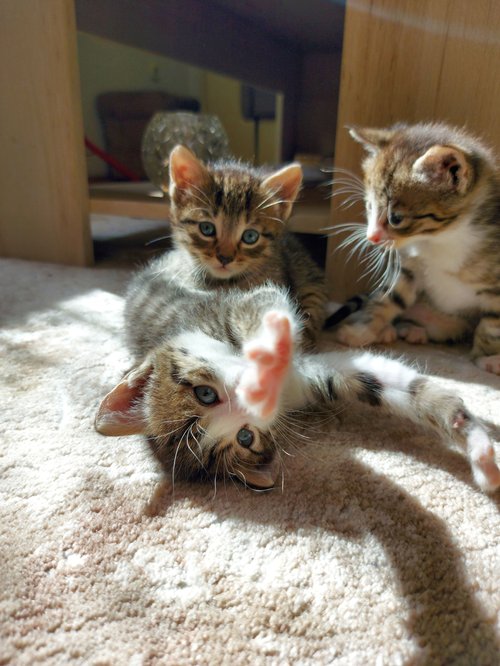
Each spring, animal shelters and rescues across the U.S. brace for “kitten season,” an annual surge in births that floods facilities with young cats. During this time, more than half of all cats entering shelters are unweaned kittens eight weeks of age or younger. Even outside of kitten season, unweaned kittens account for more than one-third of cat admissions to shelters nationwide.
As kitten intake numbers climb, shelter capacity and resources dwindle, often with dire consequences. Data from Shelter Animals Count, an ASPCA-founded organization that tracks U.S. shelter data, shows that mortality rates for kittens are four times higher than those for adult cats. Among unweaned kittens who die in shelters, 56% are euthanized, while the remainder die from illness or other factors while in the shelter. These statistics are a sinister reflection of the challenges of providing neonatal care at scale—and without sufficient research that could inform such care.
Fortunately, foster care programs can dramatically improve kitten outcomes. According to Hill’s Pet Nutrition’s report, well-supported foster programs have noted neonatal kitten save rates as high as 95%, suggesting that many kitten deaths are preventable when specialized care is available.
While foster programs address urgent short-term needs, improving kitten health on a broader scale requires a longer-term solution: better data tracking.
Organizations like Shelter Animals Count have made substantial progress in synthesizing shelter data that helps animal welfare professionals identify trends and allocate resources more effectively. However, many shelters lack standardized methods for tracking kittens and their outcomes. This lack of baseline data makes it difficult to determine which interventions work best and which kittens face the greatest risks.
This creates a troubling paradox. Kittens—especially unweaned kittens—are among the most vulnerable animals entering shelters, yet they are often the least precisely tracked. Without comprehensive data, critical gaps mar our understanding of kitten development and health.
Organizations like Darwin’s Ark and Hill’s are helping researchers better understand what happens to kittens after adoption, collecting information on health, behavior, and home environments from kittenhood through adulthood. This data can help veterinarians and researchers shift from reactive kitten care to proactive strategies that support lifelong feline health.
Early experiences influence lifelong behaviors
Although many knowledge gaps remain, researchers know that early experiences profoundly influence an animal’s personality. During the first two to nine weeks of a kitten’s life, their interactions with humans, other animals, and the surrounding environment will have lifelong impacts on their behavior. According to research cited in Hill’s report, a kitten’s early interactions with their mother or human caretakers can influence whether they develop confidence, curiosity, or fear toward unfamiliar people, places, and animals.
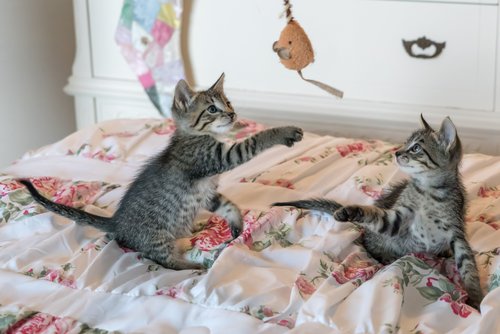
At the same time, early environments and experiences paint only a partial picture of a cat’s personality. One of the central goals of Darwin’s Cats is to understand how genetics, environment, and early experiences interact to produce the array of unique personalities that cat owners love.
How much of a cat’s personality is inherited? Which environmental factors have the greatest influence on behavior? And how can cat owners best support healthy behavioral and social development during kittenhood? Answering these questions requires data from the people who know kittens best: their caregivers.
By participating in Darwin’s Cats survey research, community scientists are contributing valuable information about kittens’ early experiences, environments, and social development. This data is helping researchers identify genetic and environmental factors associated with healthy, well-adjusted cats.
If you’re looking to make a direct impact on foundational feline research, consider taking Darwin’s Cats surveys, particularly some surveys that align with the five pillars of a healthy feline environment outlined in Hill’s report. Every survey response helps build a better understanding of how kittens grow, develop, and thrive.

Community science can catalyze veterinary care advancements
The World of the Kitten Report also showcases how veterinary recommendations for kittens are evolving in response to emerging evidence from research on feline biology.
One example is updated guidance on vaccine schedules. Research cited in the report suggests that maternal antibodies can interfere with vaccine effectiveness longer than previously recognized, which causes the core Feline Viral Rhinotracheitis, Calicivirus, and Panleukopenia (FVRCP) vaccine booster to fail in up to one-third of kittens. In response, the FelineVMA now recommends a revaccination appointment at six months of age instead of relying solely on the traditional one-year booster. This new guidance keeps veterinary medicine current with new understanding of kitten immune development.
The report also highlights the growing adoption of the “Fix by Five” initiative, which recommends spaying or neutering kittens by five months of age. Research links early sterilization with a 91% reduction in mammary cancer risk, improved prevention against testicular cancer, and a marked decrease in male hormone-driven behaviors that contribute to fighting and unintended litters.

Yet many aspects of kittenhood remain poorly understood. Scientists are still working to understand how genetics, early experiences, environment, nutrition, and veterinary care interact to shape lifelong health. Answering these questions will require continued collaboration among researchers, veterinarians, and cat owners.
Community science initiatives like Darwin’s Cats are helping make that progress possible. By contributing survey responses and sequencing data, Darwin’s Cats participants are generating the large-scale datasets essential for better understanding kitten development and improving cat veterinary care.
Kittenhood may only last twelve months, but it has lifelong effects on a cat’s health and well-being. As research continues to illuminate this critical stage of development, cat owners participating in Darwin’s Cats have a unique opportunity to directly contribute to discoveries that could improve feline welfare for generations to come.

